.jpg?width=1920)
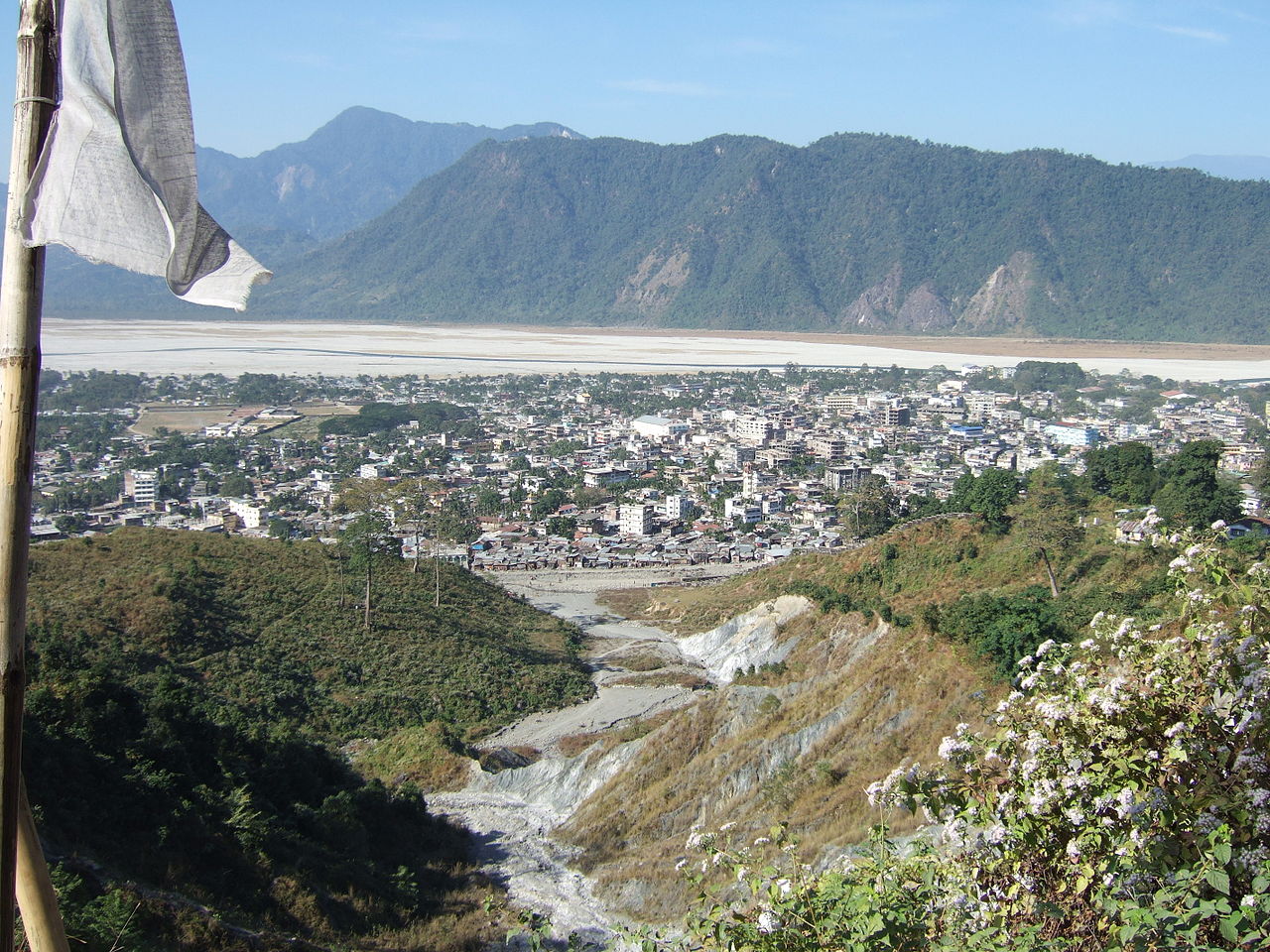


What is the capital of Bhutan?
The capital of Bhutan is Thimphu.
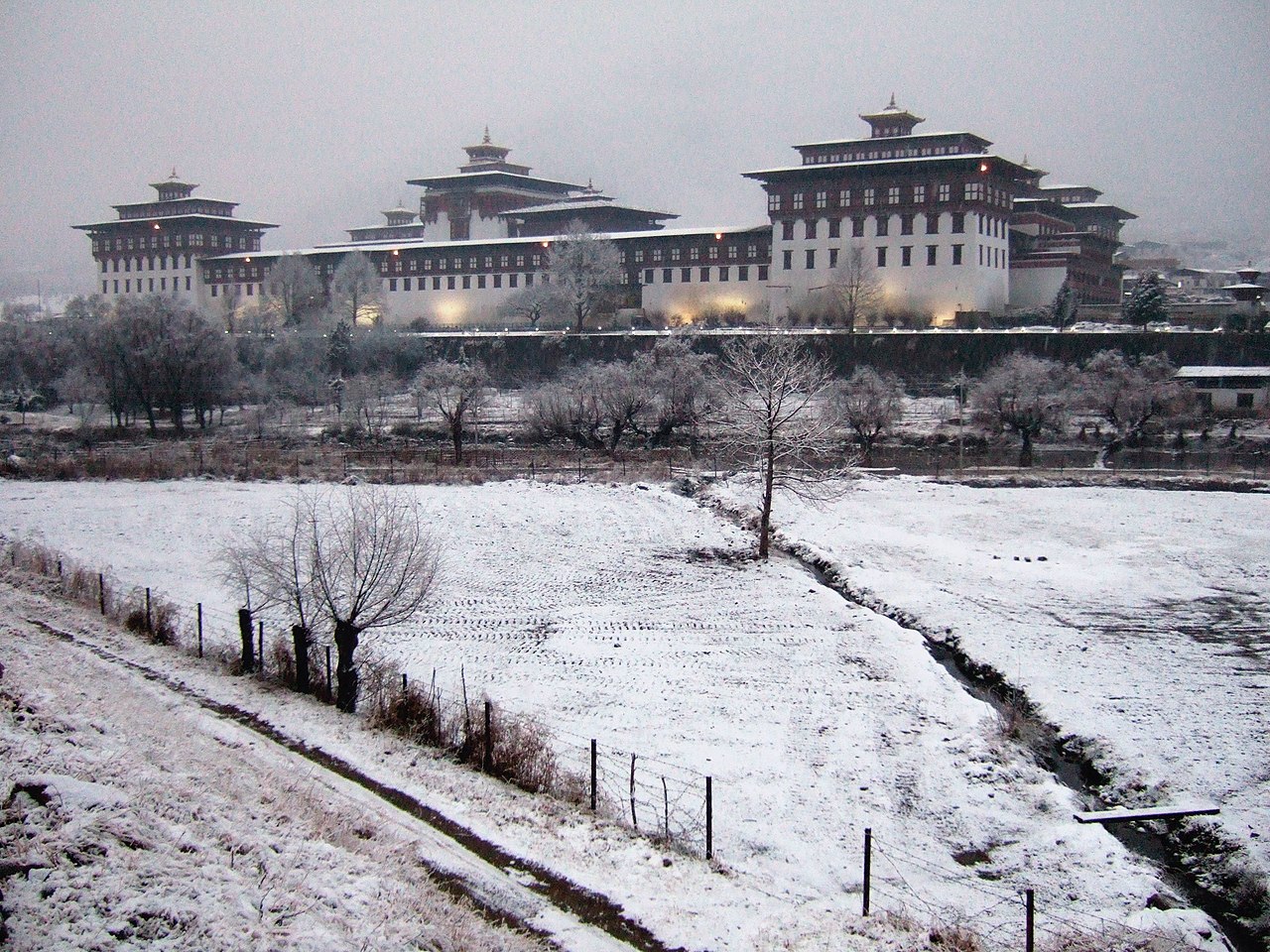
Photo: Christopher J. Fynn · CC BY-SA 3.0
Bhutan is in Southern Asia, Asia, with Thimphu as its capital. Use this guide for trip planning — best time, budget ranges, cities and practical tips.
This Bhutan travel guide covers the best time to visit, top cities, sample routes, budget ranges and how to travel to Bhutan — including visa requirements.
Most first-time trips to Bhutan work in 7–10 days: fly into Thimphu, then move only as far as your energy allows. A practical first loop is Thimphu → Paro → Punākha → Tsirang → Phuntsholing. Mid-range travellers typically budget $80–200 per person per day on the ground (flights extra). Best time: November–March for cooler, drier conditions in most regions. This route, cost band and city shortlist are Global Itinerary’s own planning layer — not a copy of another guidebook.
Capital
Thimphu
Population
754.4K
Currency
BTN · Bhutanese ngultrum (BTN)
Languages
Dzongkha
Timezone
Asia/Thimphu · UTC+06:00
Calling code
+975
Bhutan has a rich history shaped by its position in Asia and the cultures of Southern Asia, leaving a legacy visible in its landmarks, cities and traditions today.
Culture in Bhutan is expressed through its food, festivals, music and daily rhythms — a warm invitation to experience local life first-hand.
November–March for cooler, drier conditions in most regions
Bhutan has one of the most restrictive visa policies in the world, and travel to the country is highly regulated under the government's "High Value, Low Impact Tourism" scheme. In accordance with this, virtually all nationalities require a visa to enter the country, except citizens of India, Bangladesh, and the Maldives.
The currency of the country is the Bhutanese Ngultrum, denoted by the symbol "Nu." (ISO code: BTN). It is fixed to the Indian rupee at an exchange rate of 1:1, and small Indian rupee bills (₹200 or less) can be used interchangeably in Bhutan. (This is one-way only, since ngultrum are not accepted in India.) Banknotes come in denominations of 1, 5, 10, 20, 50, 100, 500 and 1,000 ngultrum.
Addresses
Bhutan does not have addresses, though streets in the bigger towns, such as Thimphu, have been designated names, which come before the suffix lam, meaning street or road. As an example, the main street in Thimphu is Norzin Lam. Monasteries are called by their specific names, followed by the word for monastery or temple in Dzongkha - Lhakhang or Goempa (Gompa). As an example, Khurjey Lhakhang is a famous monastery in Jakar.
Bhutan is a linguistically diverse country, with many languages spoken throughout the country. Dzongkha, a member of the Tibetic language family, is the national language of the country and the mother tongue of most people residing in Western Bhutan.
Much of what is considered good manners in South Asia is applicable to Bhutan.
Tshechu is the largest religious festival in Bhutan and is celebrated in the late summer and autumn throughout the country (see city articles for local information), though Thimphu Tshechu is the most famous and attracts around 30,000 people. The highlight of the tshechu ceremonies is the masked dances by monks, which were developed according to precise instructions given by past Buddhist masters. According to Buddhist philosophy, all experiences leave an imprint in the mind stream that produces…
Practical guidance for Bhutan is summarised from Wikivoyage (CC BY-SA). Always confirm official visa, health and safety requirements before you travel.
Southeast Asia's super-app: cars, motorbike taxis and food, all with fixed upfront fares.
App-based cars with upfront fares — usually the cheapest metered ride in big cities.
Name your own fare and let nearby drivers accept or counter — great for tight budgets.
Ride-hailing coverage varies here — check whether these apps are live in your city before relying on them.
Local prepaid SIM
Buy a tourist SIM from an official operator kiosk at the airport (bring your passport) — usually the cheapest data.
eSIM (Airalo / Holafly) lets you get online the moment you land — handy if you don't want to queue for a SIM.
Prices and app coverage change often — figures are indicative for 2026, so confirm the current tourist plan in the app or at the airport kiosk.
A suggested loop connecting Bhutan's major cities by proximity — a practical order for a multi-city trip.
Photos: Christopher J. Fynn, The original uploader was Technopilgrim at English Wikipedia., Jean-Marie Hullot, Azeitedemoura — via Wikimedia Commons
Typical mid-range for Bhutan
Estimated total (USD)
$2,670
≈ $1,335 per person · $381 per day group total
Ground costs ≈ $140/person/day (lodging + food + transport + activities)
Defaults match Bhutan's mid-range daily budget ($80–200 per person on the ground). Flights are a separate estimate and vary by origin.
The capital of Bhutan is Thimphu.
November–March for cooler, drier conditions in most regions.
Yes — travellers visit Bhutan for its landscapes, cities and culture. Start with Thimphu, then explore the top regions on this Bhutan travel guide for a realistic itinerary.
Visa rules for Bhutan depend on your passport — use the visa checker on this site for a nationality-specific answer. Use our Bhutan visa checker for rules by nationality before you book flights.
Budget roughly $80–200 per person per day for mid-range travel in Bhutan, not including long-haul flights. Costs vary by season and how much you move between cities.
Check current travel advice for Bhutan before you go.


