
.jpg?width=1920)


.jpg?width=1920)
What is the capital of Oman?
The capital of Oman is Muscat.
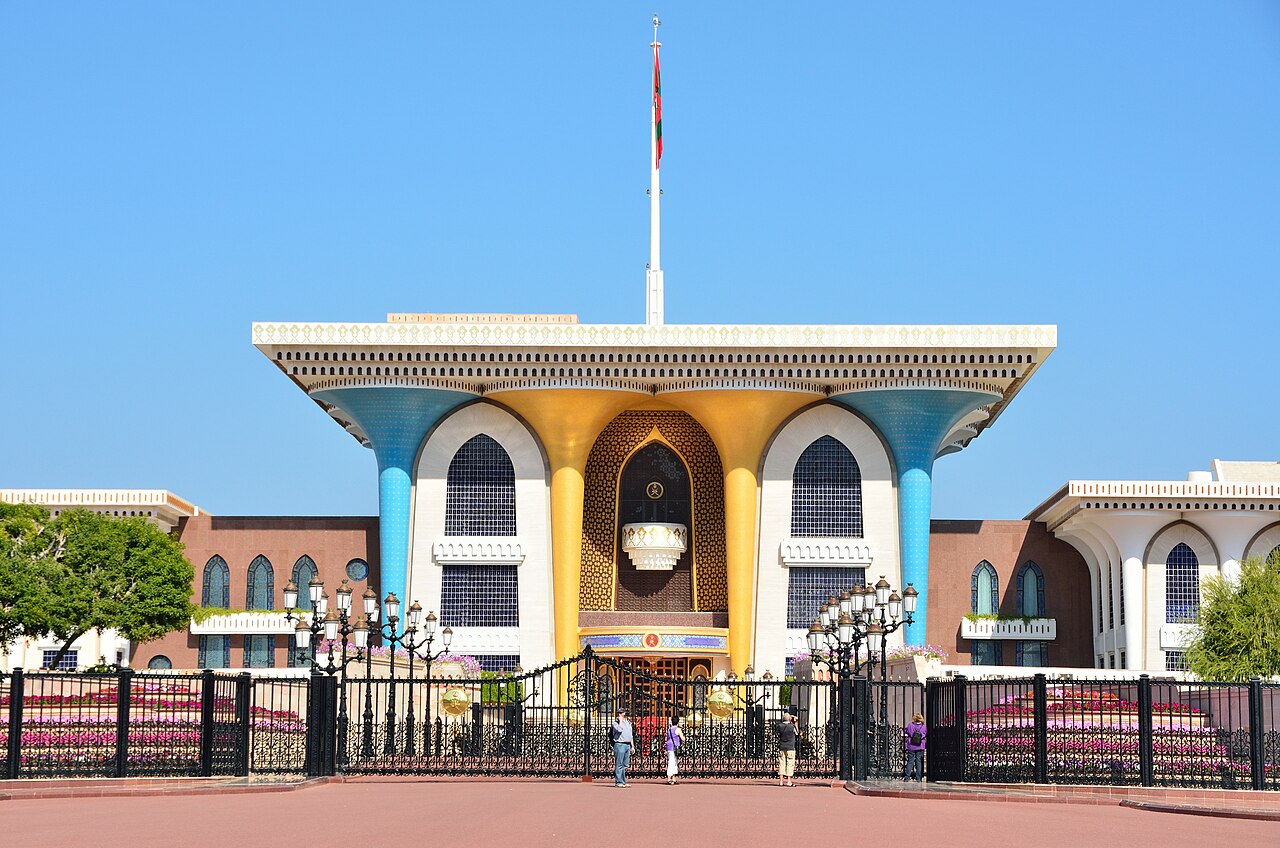
Oman is in Western Asia, Asia, with Muscat as its capital. Use this guide for trip planning — best time, budget ranges, cities and practical tips.
This Oman travel guide covers the best time to visit, top cities, sample routes, budget ranges and how to travel to Oman — including visa requirements.
Most first-time trips to Oman work in 7–10 days: fly into Muscat, then move only as far as your energy allows. A practical first loop is Muscat → Bawshar → Seeb → Nizwa → ‘Ibrī → Şaḩam. Mid-range travellers typically budget $80–180 per person per day on the ground (flights extra). Best time: November–March for cooler, drier conditions in most regions. This route, cost band and city shortlist are Global Itinerary’s own planning layer — not a copy of another guidebook.
Capital
Muscat
Population
4.8M
Currency
OMR · Omani rial (OMR)
Languages
Arabic
Timezone
Asia/Muscat · UTC+04:00
Calling code
+968
Oman has a rich history shaped by its position in Asia and the cultures of Western Asia, leaving a legacy visible in its landmarks, cities and traditions today.
Culture in Oman is expressed through its food, festivals, music and daily rhythms — a warm invitation to experience local life first-hand.
November–March for cooler, drier conditions in most regions
Citizens of the Gulf Cooperation Council (GCC) countries (Bahrain, Kuwait, Qatar, Saudi Arabia and the United Arab Emirates) may enter Oman without a visa and stay indefinitely. A single entry visa can be obtained upon arrival at any air, land or sea terminal by citizens of the following countries:
The currency in Muscat is the Omani rial, denoted by the symbol "ريال" (ISO currency code OMR). Wikivoyage uses "RO" to remote the currency. One rial is made up of one thousand baisa (also written baiza, Arabic: بيسة). The Omani rial is tied to the US dollar at 1 rial = US$2.6008 making it one of the largest units of currency in the world; exchange rates on the streets are a percentage point or two lower. The exchange rate to the neighboring country United Arab Emirates is also fixed at about 1 rial = 10 dirham.
By plane
Oman Air is the national carrier and flies regularly between the two airports in the country (Muscat/Seeb, and Salalah). Air Arabia offers flights to Salalah and Muscat from the United Arab Emirates (UAE).
Arabic is the national language, and there are three major dialects are spoken in Oman: Omani, Gulf and Dhofar Arabic. But most Omanis will speak good to excellent English, and particularly so in major tourist areas and cities. An English-speaking traveller should have no language difficulties.
Homosexuality is illegal in Oman. LGBT tourists should be self-aware. Driving in Muscat can sometimes be a problem, although this is due more to congestion than bad driving on the part of the locals. Outside of the major cities, a common driving risk is falling asleep at the wheel due to the long stretches of featureless desert. Driving in Oman calls for attention to the unexpected. It has 85.3 road fatalities per 100,000 motor vehicles, which is more than double the UAE and much higher than most European countries.
Bottled drinking (mineral) water is easily available at most stores. Tap water is generally safe; however, most Omanis drink bottled water and to be safe, you should too. 500ml bottles of water will generally cost 100bz in the majority of shops with a 1.5l bottle costing only 200bz.
Dialling out from Oman you will need to dial 00 + International Code + Number. Dialling into Oman callers use +968 followed by an 8 digit number. These 8-digit numbers generally start with a 9 if it is mobile number, and with 2 for land lines, though other numbers will eventually start to get used.
Before he died in 2020, Sultan Qaboos did more to develop the nation than any Arab leader, or most world leaders in recent history for that matter. Qaboos is held in the highest regard — even revered — by the vast majority of Omanis. Visitors should refrain from making any comments or statements that could be construed as disrespectful.
Practical guidance for Oman is summarised from Wikivoyage (CC BY-SA). Always confirm official visa, health and safety requirements before you travel.
Oman's local taxi app.
The Middle East super-app (Uber-owned); cars plus cheaper bikes in some cities.
Omantel / Ooredoo
Prepaid tourist SIMs with data.
eSIM (Airalo / Holafly) lets you get online the moment you land — handy if you don't want to queue for a SIM.
Prices and app coverage change often — figures are indicative for 2026, so confirm the current tourist plan in the app or at the airport kiosk.
A suggested loop connecting Oman's major cities by proximity — a practical order for a multi-city trip.
Photos: Tristan, Luca Margheriti, Azd0815, J. R. Schmid, Bernhard Dunst, Redfox5500 — via Wikimedia Commons
Typical mid-range for Oman
Estimated total (USD)
$2,565
≈ $1,283 per person · $366 per day group total
Ground costs ≈ $130/person/day (lodging + food + transport + activities)
Defaults match Oman's mid-range daily budget ($80–180 per person on the ground). Flights are a separate estimate and vary by origin.
The capital of Oman is Muscat.
November–March for cooler, drier conditions in most regions.
Yes — travellers visit Oman for its landscapes, cities and culture. Start with Muscat, then explore the top regions on this Oman travel guide for a realistic itinerary.
Visa rules for Oman depend on your passport — use the visa checker on this site for a nationality-specific answer. Use our Oman visa checker for rules by nationality before you book flights.
Budget roughly $80–180 per person per day for mid-range travel in Oman, not including long-haul flights. Costs vary by season and how much you move between cities.
Check current travel advice for Oman before you go.


