What is the capital of United States?
The capital of United States is Washington D.C..
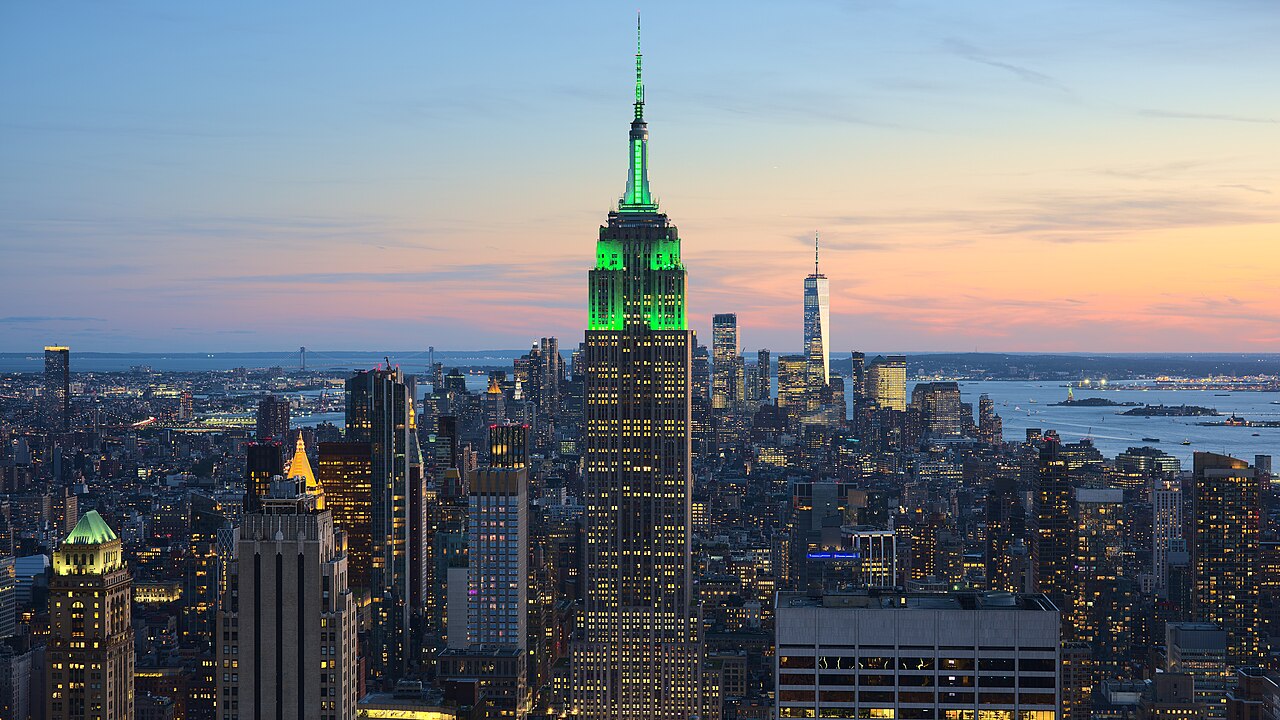
Visit United States — practical travel planning
Photo: Dllu · CC BY-SA 4.0
United States is in North America, North America, with Washington D.C. as its capital. Use this guide for trip planning — best time, budget ranges, cities and practical tips.
This United States travel guide covers the best time to visit, top cities, sample routes, budget ranges and how to travel to United States — including visa requirements.
Most first-time trips to United States work in 10–14 days: fly into Washington D.C., then move only as far as your energy allows. A practical first loop is Albany → Lenox → Stockbridge → Hartford → New Haven → Queens. Mid-range travellers typically budget $120–280 per person per day on the ground (flights extra). Best time: Late spring and early autumn for pleasant temperatures. This route, cost band and city shortlist are Global Itinerary’s own planning layer — not a copy of another guidebook.
Capital
Washington D.C.
Population
326.7M
Currency
$ · United States dollar (USD)
Languages
English
Timezone
America/New York · UTC-04:00
Calling code
+1
United States has a rich history shaped by its position in Americas and the cultures of North America, leaving a legacy visible in its landmarks, cities and traditions today.
Culture in United States is expressed through its food, festivals, music and daily rhythms — a warm invitation to experience local life first-hand.
The United States has a strict and notoriously perplexing visa policy; nearly everyone needs a visa to visit the country, and obtaining an American visa of any kind can be a complicated and cumbersome affair.
The U.S. currency is the United States dollar ($), divided into 100 cents (¢). Foreign currencies are almost never accepted, though some major hotel chains may accept traveller's checks in other currencies. Some establishments close to the Canadian and Mexican borders accept their currencies, though usually at poor exchange rates. Japanese yen is sometimes accepted in Hawaii.
The size of the U.S. and the distance separating major cities make air the dominant mode of long-distance travel for short-term travellers. If you have time, or are travelling a short distance, travel by car, bus, or rail can be far more interesting. Long-distance car travel, in particular, is a quintessentially American way to see the country. That said, do not underestimate the size of the country and the time it takes to travel between cities. For comparison, the distance between New York City and San Francisco is greater than that between Lisbon and Moscow.
Almost all Americans speak English, and visitors are generally expected to speak and understand English. Popular tourist sites often have signs and information available in other languages. Americans have a long history of immigration and are very accommodating towards foreign accents. Major cities often have groups of foreign language learners who meet up regularly to practice their language skills, and these can be a good way to meet locals if you speak the language in question. Meetup.com is…
The United States is generally a safe country for tourists, but risks do exist.
Crime
Although headline-grabbing major crimes give the U.S. a reputation for crime, few visitors experience any problems; common-sense precautions and staying alert are generally sufficient to avoid trouble. The U.S. does have a notably higher homicide rate than European countries, but with the highest rates of violent crime connected with gangs and drugs in specific neighborhoods, and with heated disputes; avoid those and you'll likely be fine. Most urban tourist areas are heavily policed and are generally s…
Disease
The U.S. is relatively free from serious communicable diseases found in many developing nations; however, the HIV rate is higher than in Canada and Western Europe, with about a 0.5% infection rate in the overall population.
The best option is a mobile phone with a U.S.-based carrier or with Voice over IP (VoIP) software and Wi-Fi. Public pay phones are very rare even in major cities, and hotel room telephones impose high fees for even local and toll-free numbers.
Cultural norms vary significantly from region to region. In general, social etiquette tends to be more formal in the Northeast and the South, more casual on the West Coast, and somewhere between those two extremes in the Midwest.
All federal government offices, post offices and banks close on federal holidays, but private businesses may choose whether or not to observe them. Nearly all states and localities observe the federal holidays, and many also observe additional holidays. If a federal holiday falls on a weekend, the observance is shifted to the nearest weekday (either Friday or Monday), though festivities are held and most store closures occur on the annual date, even if it's during the weekend.
Practical guidance for United States is summarised from Wikivoyage (CC BY-SA). Always confirm official visa, health and safety requirements before you travel.
App-based cars with upfront fares — usually the cheapest metered ride in big cities.
Uber's main US/Canada rival — compare both for the lowest fare.
Compare Uber and Lyft side by side — prices swing with surge pricing.
US Mobile / Mint Mobile
Cheapest prepaid eSIMs/plans for visitors (on Verizon/T-Mobile networks).
T-Mobile / AT&T prepaid tourist SIM
Best coverage; prepaid plans with lots of data.
eSIM (Airalo / Holafly) lets you get online the moment you land — handy if you don't want to queue for a SIM.
Prices and app coverage change often — figures are indicative for 2026, so confirm the current tourist plan in the app or at the airport kiosk.
A suggested loop connecting United States's major cities by proximity — a practical order for a multi-city trip.
Skyline icons, borough energy and world-class culture

Explore Los Angeles
.jpg?width=1920)
Fog, bridges and Pacific creativity

Art Deco, beaches and Latin flavour
.jpg?width=1920)
Theme-park capital of the world
.jpg?width=1920)
Neon Strip, shows and desert day trips

Monuments, free museums and capital neighbourhoods

Freedom Trail history and harbour neighbourhoods
335 cities — grouped A–Z so you can scan without loading every photo.
Photos: Dllu, Gnaphron, Sashimi-b, File:Chicago River ferry.jpg: John Picken derivative work: Georgfotoart, Epicgenius, Katie Haugland Brown — via Wikimedia Commons
Typical mid-range for United States
Estimated total (USD)
$3,300
≈ $1,650 per person · $471 per day group total
Ground costs ≈ $200/person/day (lodging + food + transport + activities)
Defaults match United States's mid-range daily budget ($120–280 per person on the ground). Flights are a separate estimate and vary by origin.
The capital of United States is Washington D.C..
Late spring and early autumn for pleasant temperatures.
Yes — travellers visit United States for its landscapes, cities and culture. Start with Washington D.C., then explore the top regions on this United States travel guide for a realistic itinerary.
Visa rules for United States depend on your passport — use the visa checker on this site for a nationality-specific answer. Use our United States visa checker for rules by nationality before you book flights.
Budget roughly $120–280 per person per day for mid-range travel in United States, not including long-haul flights. Costs vary by season and how much you move between cities.
Check current travel advice for United States before you go.


