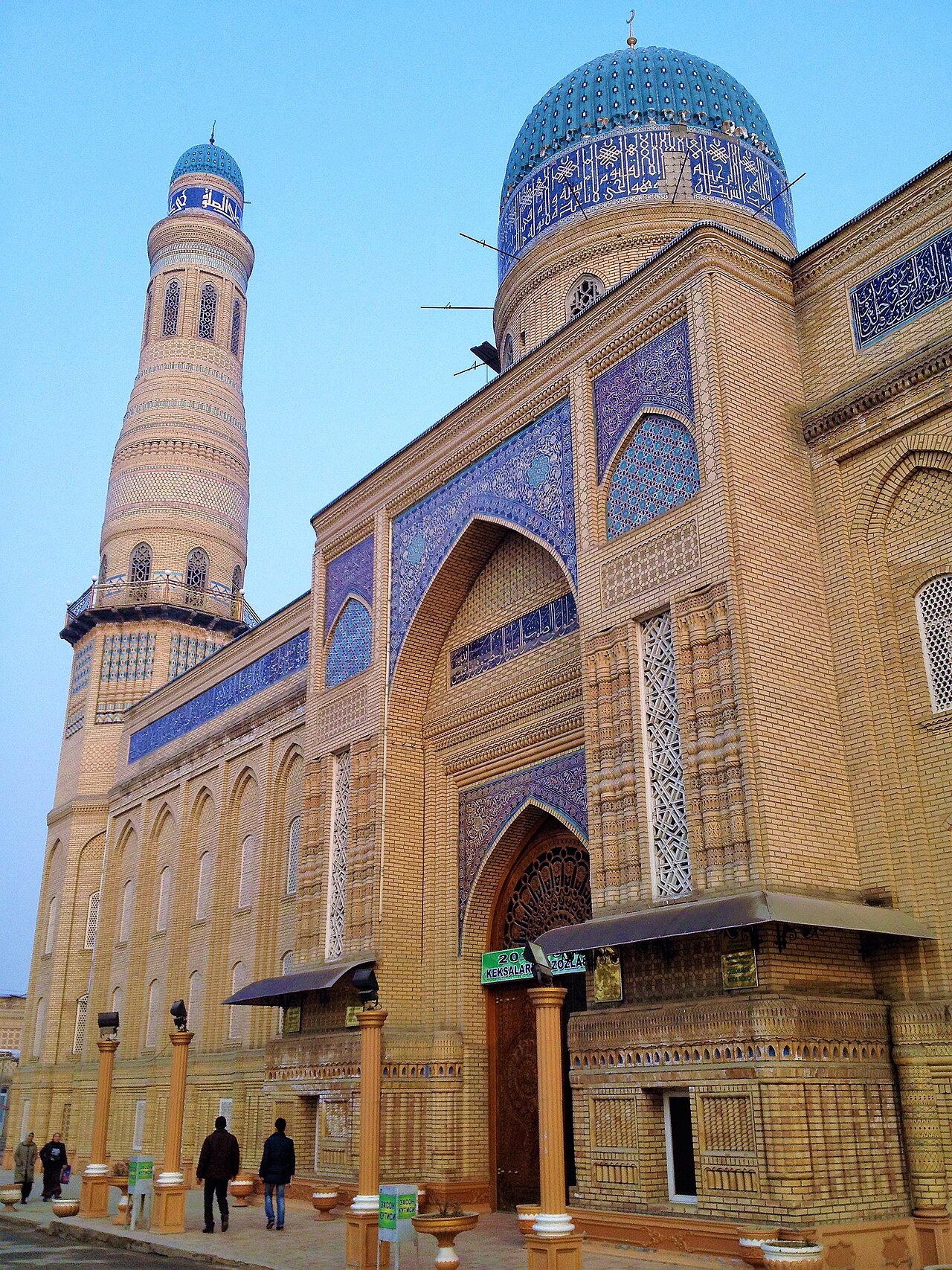

.jpg?width=1920)



What is the capital of Uzbekistan?
The capital of Uzbekistan is Tashkent.

Uzbekistan is in Central Asia, Asia, with Tashkent as its capital. Use this guide for trip planning — best time, budget ranges, cities and practical tips.
This Uzbekistan travel guide covers the best time to visit, top cities, sample routes, budget ranges and how to travel to Uzbekistan — including visa requirements.
Most first-time trips to Uzbekistan work in 7–10 days: fly into Tashkent, then move only as far as your energy allows. A practical first loop is Tashkent → Yunusobod → Namangan → Andijon → Samarkand → Bukhara. Mid-range travellers typically budget $35–95 per person per day on the ground (flights extra). Best time: November–March for cooler, drier conditions in most regions. This route, cost band and city shortlist are Global Itinerary’s own planning layer — not a copy of another guidebook.
Capital
Tashkent
Population
33.0M
Currency
UZS · Uzbekistani soʻm (UZS)
Languages
Russian, Uzbek
Timezone
Asia/Tashkent · UTC+05:00
Calling code
+998
Uzbekistan has a rich history shaped by its position in Asia and the cultures of Central Asia, leaving a legacy visible in its landmarks, cities and traditions today.
Culture in Uzbekistan is expressed through its food, festivals, music and daily rhythms — a warm invitation to experience local life first-hand.
November–March for cooler, drier conditions in most regions
Entry requirements
Citizens of most western countries (including the United States since January 2026), as well as CIS countries, China, and various others, can visit the country without a visa.
The currency of the country is the Uzbekistani so‘m, denoted in Cyrillic as "сўм" (ISO code: UZS). There is no longer a need for black market currency exchange. The official rate is the same as the real rate.
Maps
If you prefer a paper map, look in your home country for one made by Reise Know-How or Gizi Map. Yandex Maps is superior to Google Maps in this part of the world. OpenStreetMap (with various apps) is also better than Google Maps here.
The official state language of Uzbekistan is Uzbek, a Turkic language. The majority of citizens (over 85%) are ethnic Uzbeks and speak it as their native language, although due to its history as part of the Soviet Union, many (especially in Tashkent) also speak Russian, which is still a mandatory second language in all schools, and is the de facto second official language and used for interethnic communication. Local Russian has been strongly influenced by Uzbek, and many Uzbek speakers often us…
Uzbekistan is generally safe for visitors. Normal precautions should be taken, as one would in virtually any country. Don't walk alone in dimly-lit areas of cities at night. Refrain from displaying large amounts of cash in public. To dissuade pickpockets, particularly in the bazaars, men should keep wallets in a front pocket and women should keep purses in front of them with a strap around an arm. Avoid wearing flashy or valuable jewellery which can easily be snatched.
Uzbekistan's health care is not up to Western standards. There is often a shortage of medicines and medical supplies. Travellers should take the necessary medicines (including prescriptions, see section on laws and practices) and supplies with them. Local hospitals should be used with caution.
Mobile connection works in most parts of Uzbekistan and the services are cheap. The mobile service providers are Beeline, Mobiuz, Ucell, UzTelecom (a.k.a. UzMobile). Also Perfectum, which mostly uses CDMA technology, useless for visitors as of March 2026. In Tashkent only, they have 5G.
In Uzbekistan, and in Central Asia in general, elderly people are greatly respected. Always treat the elderly with great respect and be deferent to them in all situations. Also be polite with females. Traditionally it is not welcomed to flirt openly with women. If you are a male and there is an option to address a male with the question instead of female, choose it. But likewise use caution if seeking out a same-sex conversation on a romantic level, as LGBT rights aren't a thing in Uzbekistan but rather still criminalized.
Holidays in accordance with the lunar year: the dates of these holidays vary according to the lunar calendar.
Practical guidance for Uzbekistan is summarised from Wikivoyage (CC BY-SA). Always confirm official visa, health and safety requirements before you travel.
Cheap, reliable cars across Russia, the Caucasus and Central Asia.
Yandex Go is cheap and reliable in Tashkent and Samarkand.
Beeline / Ucell / Mobiuz
Cheap prepaid tourist SIMs with data.
eSIM (Airalo / Holafly) lets you get online the moment you land — handy if you don't want to queue for a SIM.
Prices and app coverage change often — figures are indicative for 2026, so confirm the current tourist plan in the app or at the airport kiosk.
A suggested loop connecting Uzbekistan's major cities by proximity — a practical order for a multi-city trip.
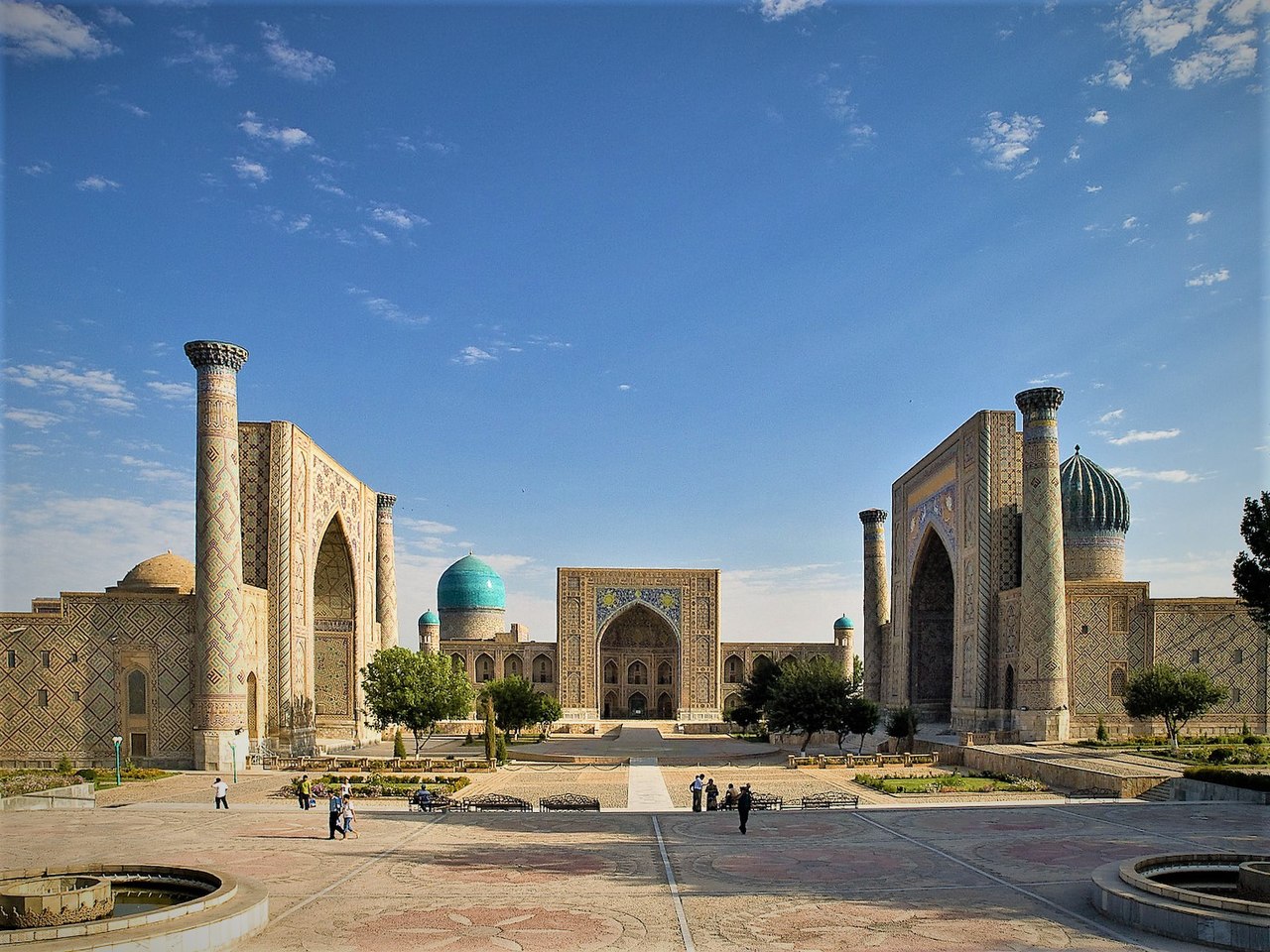
Photos: Carpodacus, Jamshid Nurkulov, Registan_-_Gusjer.jpg: Gustavo Jeronimo from Aranjuez, Spain derivative work: MrPanyGoff, Dэя-Бøяg, Aziko9 — via Wikimedia Commons
Typical mid-range for Uzbekistan
Estimated total (USD)
$1,935
≈ $968 per person · $276 per day group total
Ground costs ≈ $70/person/day (lodging + food + transport + activities)
Defaults match Uzbekistan's mid-range daily budget ($35–95 per person on the ground). Flights are a separate estimate and vary by origin.
The capital of Uzbekistan is Tashkent.
November–March for cooler, drier conditions in most regions.
Yes — travellers visit Uzbekistan for its landscapes, cities and culture. Start with Tashkent, then explore the top regions on this Uzbekistan travel guide for a realistic itinerary.
Visa rules for Uzbekistan depend on your passport — use the visa checker on this site for a nationality-specific answer. Use our Uzbekistan visa checker for rules by nationality before you book flights.
Budget roughly $35–95 per person per day for mid-range travel in Uzbekistan, not including long-haul flights. Costs vary by season and how much you move between cities.
Check current travel advice for Uzbekistan before you go.


