What is the capital of Vietnam?
The capital of Vietnam is Hanoi.

Vietnam is in South-Eastern Asia, Asia, with Hanoi as its capital. Use this guide for trip planning — best time, budget ranges, cities and practical tips.
This Vietnam travel guide covers the best time to visit, top cities, sample routes, budget ranges and how to travel to Vietnam — including visa requirements.
Most first-time trips to Vietnam work in 10–14 days: fly into Hanoi, then move only as far as your energy allows. A practical first loop is Hanoi → Ninh Bình → Haiphong → Cát Bà → Bai Chay → Ha Long. Mid-range travellers typically budget $30–90 per person per day on the ground (flights extra). Best time: November–March for cooler, drier conditions in most regions. This route, cost band and city shortlist are Global Itinerary’s own planning layer — not a copy of another guidebook.
Capital
Hanoi
Population
95.5M
Currency
₫ · Vietnamese đồng (VND)
Languages
Vietnamese
Timezone
Asia/Ho Chi Minh · UTC+07:00
Calling code
+84
Vietnam has a rich history shaped by its position in Asia and the cultures of South-Eastern Asia, leaving a legacy visible in its landmarks, cities and traditions today.
Culture in Vietnam is expressed through its food, festivals, music and daily rhythms — a warm invitation to experience local life first-hand.
November–March for cooler, drier conditions in most regions
Entry requirements
Visa-free entry
As of 2025, visitors from the following countries, with their passport validity being at least 6 months from the date of entry, do not require a visa and can stay for the following number of days:
The national currency is the dong (đồng), sometimes denoted by the symbol "₫" (ISO code: VND). Prices are usually shown without a currency notation, e.g. as "100.000", "100k" or "100K", and in speech it's common to drop the thousands completely. Wikivoyage articles will use dong to denote the currency.
Trains are undoubtedly the most comfortable and an exciting way to travel overland in Vietnam. Due to the steady increase of tourist bus prices, trains are now an inexpensive alternative to buses. While a night in a sleeper carriage is still more expensive than a sleeper bus, seat carriage prices are very competitive.
The official language of Vietnam is Vietnamese (Tiếng Việt). Vietnamese is a tonal language that uses a change in pitch to inflect different meanings, and this can make it difficult to master. Travellers may still be surprised to learn that the basic grammar is pretty simple. Verbs are static regardless of the past or future and parts of speech are pretty straightforward. The major difficulties lie in the pronunciation of the various tones and some of the sounds. Vietnamese is an Austroasiatic l…
Vietnam has made a huge leap forward in terms of economic development and tourism, and many of the most feared annoyances are minor concerns. Vietnam is still a poor country, though. Tourists are considered money mules, and milking them is no crime. Nevertheless, outside of tourist hotspots, crime and scams against foreigners are rare.
Tropical diseases such as malaria, dengue fever and Japanese encephalitis are endemic in rural Vietnam. Malaria isn't as much a concern in the bigger cities such as Ho Chi Minh City and Hanoi, but always remember to take liquid mosquito repellent with you. It may be very useful, especially in the countryside and crowded neighborhoods.
Land-line numbers in Hanoi and HCMC have a sequence of eight numbers, others have seven. Telephone bills are 30% to 40% cheaper if dialed with 171 or 178 services. Since hotels and guesthouses often charge higher for telephone calls, try to find a post office or any reliable public service.
In traditional Vietnamese culture, elders are treated with great deference and respect. While expectations are more relaxed when foreigners are involved, it's a good idea to show politeness, respect and restraint towards those who look older than you.
By far the largest holiday is Tết — the Lunar New Year — which takes place between late January and March. In the period leading up to Tết, the country is abuzz with preparations. Guys on motorbikes rush around delivering potted tangerine trees and flowering bushes, the traditional household decorations. People get a little bit stressed out and the elbows get sharper, especially in big cities, where the usual hectic level of traffic becomes almost homicidal. Then a few days before Tết the pace b…
Practical guidance for Vietnam is summarised from Wikivoyage (CC BY-SA). Always confirm official visa, health and safety requirements before you travel.
Southeast Asia's super-app: cars, motorbike taxis and food, all with fixed upfront fares.
Vietnamese app with cheap cars and motorbike rides.
Vietnam's all-electric taxi and bike fleet.
Grab is everywhere; GrabBike motorbike taxis are extremely cheap. Xanh SM is the electric option.
Viettel / Mobifone / Vinaphone
Very cheap big-data tourist SIMs; buy at the airport (bring passport).
eSIM (Airalo / Holafly) lets you get online the moment you land — handy if you don't want to queue for a SIM.
Prices and app coverage change often — figures are indicative for 2026, so confirm the current tourist plan in the app or at the airport kiosk.
A suggested loop connecting Vietnam's major cities by proximity — a practical order for a multi-city trip.

Vietnam

Vietnam

Vietnam
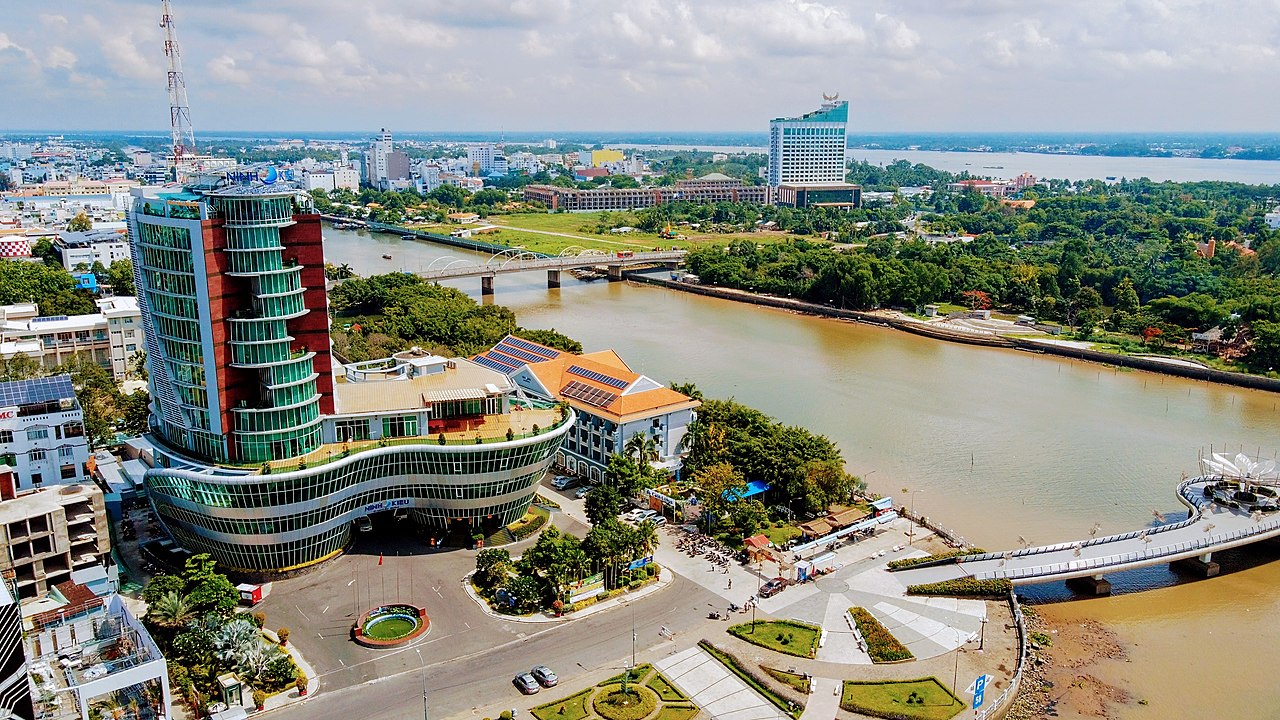
Vietnam

Vietnam

Vietnam

Vietnam

Vietnam
29 cities — grouped A–Z so you can scan without loading every photo.
Photos: Steffen Schmitz (more photos), Quangnlnhe182394, HP1992, [//commons.wikimedia.org/wiki/User:Trantuonglam Trantuonglam], KoenB, Somerset999 — via Wikimedia Commons
Typical mid-range for Vietnam
Estimated total (USD)
$1,760
≈ $880 per person · $251 per day group total
Ground costs ≈ $55/person/day (lodging + food + transport + activities)
Defaults match Vietnam's mid-range daily budget ($30–90 per person on the ground). Flights are a separate estimate and vary by origin.
The capital of Vietnam is Hanoi.
November–March for cooler, drier conditions in most regions.
Yes — travellers visit Vietnam for its landscapes, cities and culture. Start with Hanoi, then explore the top regions on this Vietnam travel guide for a realistic itinerary.
Visa rules for Vietnam depend on your passport — use the visa checker on this site for a nationality-specific answer. Use our Vietnam visa checker for rules by nationality before you book flights.
Budget roughly $30–90 per person per day for mid-range travel in Vietnam, not including long-haul flights. Costs vary by season and how much you move between cities.
Check current travel advice for Vietnam before you go.


