
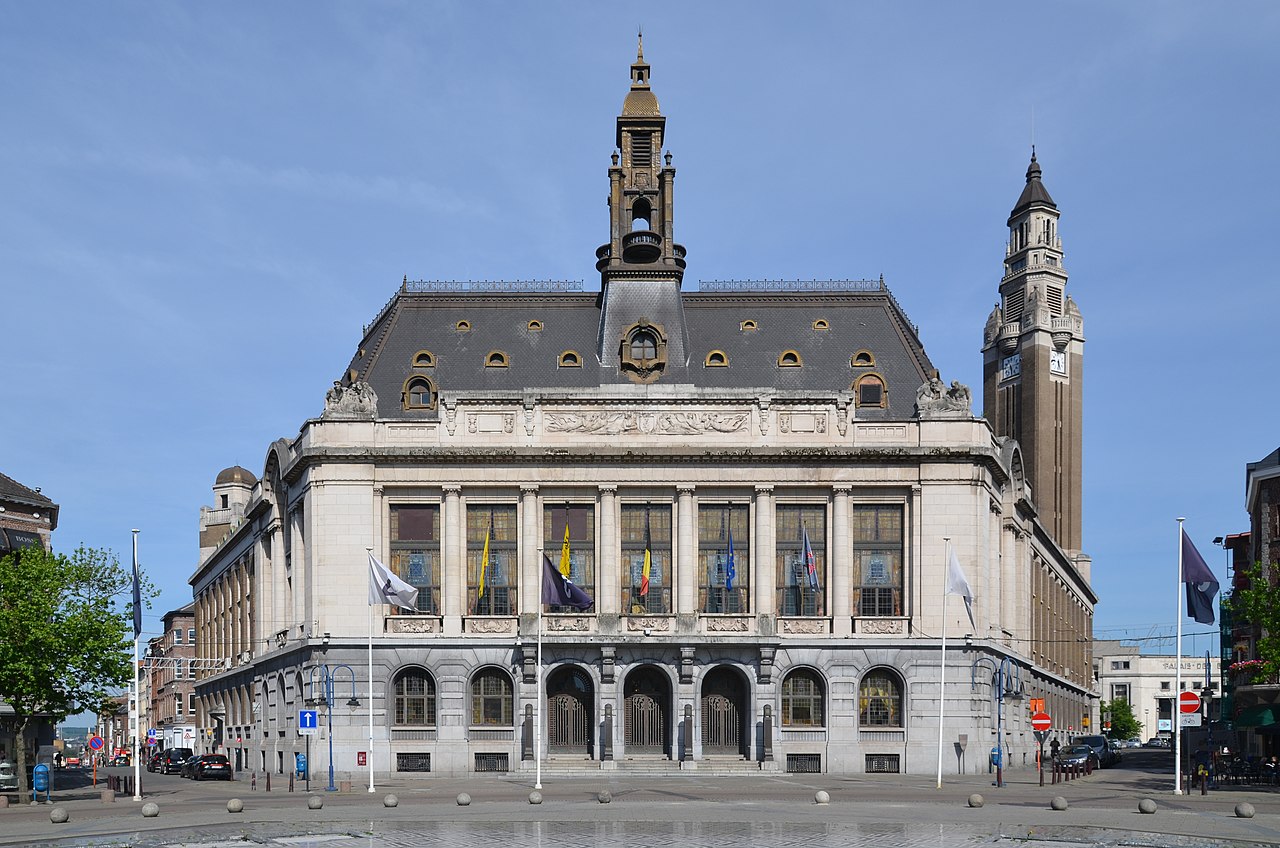


What is the capital of Belgium?
The capital of Belgium is Brussels.

Photo: Francisco Conde Sánchez · CC BY-SA 3.0
Belgium is in Western Europe, Europe, with Brussels as its capital. Use this guide for trip planning — best time, budget ranges, cities and practical tips.
This Belgium travel guide covers the best time to visit, top cities, sample routes, budget ranges and how to travel to Belgium — including visa requirements.
Most first-time trips to Belgium work in 10–14 days: fly into Brussels, then move only as far as your energy allows. A practical first loop is Brussels → Anderlecht → Mechelen → Antwerp → Leuven → Namur. Mid-range travellers typically budget $110–230 per person per day on the ground (flights extra). Best time: May–June & September–October for mild weather and thinner crowds. This route, cost band and city shortlist are Global Itinerary’s own planning layer — not a copy of another guidebook.
Capital
Brussels
Population
11.4M
Currency
€ · Euro (EUR)
Languages
German, French, Dutch
Timezone
Europe/Brussels · UTC+02:00
Calling code
+32
Belgium has a rich history shaped by its position in Europe and the cultures of Western Europe, leaving a legacy visible in its landmarks, cities and traditions today.
Culture in Belgium is expressed through its food, festivals, music and daily rhythms — a warm invitation to experience local life first-hand.
May–June & September–October for mild weather and thinner crowds
In Belgium, non-EU/EFTA visa-free visitors are permitted to work without the need to obtain any further authorisation for the period of their 90-day visa-free stay. This is an exception to the general Schengen rules that does not extend to most other Schengen countries.
Tipping in Belgium is not usually done as service charge is always included. However, you may tip as a sign of appreciation. Usually, this is done by paying in bank notes with a total value slightly higher than the price of the meal and telling the waiter/waitress that they can keep the change.
Being such a small country (300 km as its maximum distance), you can get anywhere in a couple of hours. Public transport, when fully functioning, is fast and comfortable, and not too expensive. Between larger cities, there are frequent train connections, with buses covering smaller distances. A useful site is Smart Mobility Planner, which has a door-to-door routeplanner for the whole country, covering all forms of public transport (including train, bus, subway and tram).
Belgium has three official languages at the federal level: Dutch, French and German. However, one will quickly notice that the Belgian versions of these languages possess a few idiosyncrasies: Although Belgium has three official languages, that does not mean that all of them are official everywhere. The official language of Flanders is Dutch and the official language of Wallonia is French. Brussels' official languages are Dutch and French (though French is more commonly spoken) and German is the…
With the notable exceptions of certain major urban areas like Brussels (mostly the northern and western sections of the region), Antwerp (the southern neighbourhoods), and Walloon cities bordering France (Mons, Mouscron), Belgium is a very safe country. Tourists will feel perfectly fine by taking basic precautions, like not flashing expensive jewelry or avoiding poorly-lit streets. If you ever fall victim to crime, the emergency phone number in Belgium (fire, police, paramedics) is 112.
In the winter, like most other European countries, only influenza will cause you a considerable inconvenience. No inoculations are needed to enter or leave Belgium. Tap water is safe to drink throughout Belgium. As one of Europe's most densely populated countries, Belgium suffers from serious air pollution. This applies for both urban and rural areas.
Belgium has a modern telephone system with nationwide cellular telephone coverage, and multiple internet access points in all cities, free in most libraries. Also in multiple gas stations, NMBS/SNCB train stations and diners on the highways there is Wi-Fi available.
Giving tips in bars or restaurants is virtually unheard of, even in larger cities. Doing so does shows that you were satisfied with the service given, but you are absolutely not obliged to do so. Depending on the total, a tip of to is considered generous.
Practical guidance for Belgium is summarised from Wikivoyage (CC BY-SA). Always confirm official visa, health and safety requirements before you travel.
Mobile Vikings / Scarlet
Cheap prepaid data SIMs.
Proximus / Orange / Base
Best coverage.
eSIM (Airalo / Holafly) lets you get online the moment you land — handy if you don't want to queue for a SIM.
Prices and app coverage change often — figures are indicative for 2026, so confirm the current tourist plan in the app or at the airport kiosk.
A suggested loop connecting Belgium's major cities by proximity — a practical order for a multi-city trip.
Photos: Francisco Conde Sánchez, LBM1948, Jmh2o, A.Savin, Trougnouf (Benoit Brummer) — via Wikimedia Commons
Typical mid-range for Belgium
Estimated total (USD)
$2,985
≈ $1,493 per person · $426 per day group total
Ground costs ≈ $170/person/day (lodging + food + transport + activities)
Defaults match Belgium's mid-range daily budget ($110–230 per person on the ground). Flights are a separate estimate and vary by origin.
The capital of Belgium is Brussels.
May–June & September–October for mild weather and thinner crowds.
Yes — travellers visit Belgium for its landscapes, cities and culture. Start with Brussels, then explore the top regions on this Belgium travel guide for a realistic itinerary.
Visa rules for Belgium depend on your passport — use the visa checker on this site for a nationality-specific answer. Use our Belgium visa checker for rules by nationality before you book flights.
Budget roughly $110–230 per person per day for mid-range travel in Belgium, not including long-haul flights. Costs vary by season and how much you move between cities.
Check current travel advice for Belgium before you go.


