What is the capital of Ecuador?
The capital of Ecuador is Quito.
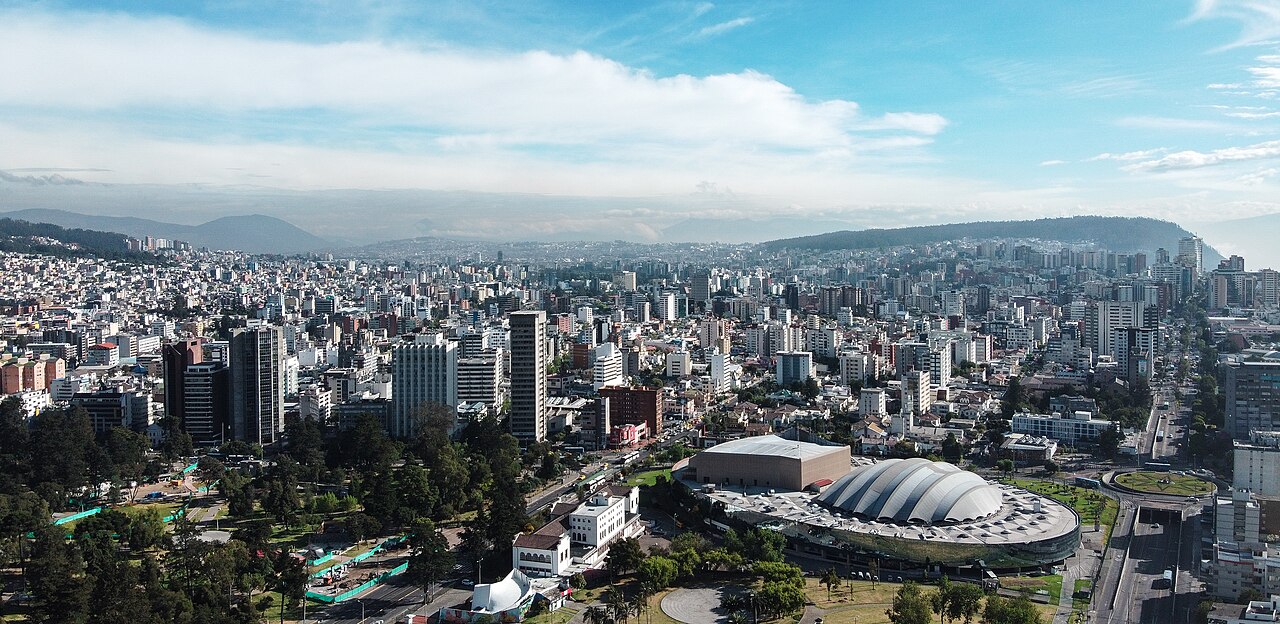
Ecuador is in South America, South America, with Quito as its capital. Use this guide for trip planning — best time, budget ranges, cities and practical tips.
This Ecuador travel guide covers the best time to visit, top cities, sample routes, budget ranges and how to travel to Ecuador — including visa requirements.
Most first-time trips to Ecuador work in 10–14 days: fly into Quito, then move only as far as your energy allows. A practical first loop is Quito → Mindo → Santo Domingo de los Colorados → Papallacta → Ambato → Baños de Agua Santa. Mid-range travellers typically budget $35–95 per person per day on the ground (flights extra). Best time: The dry season (roughly May–September) is ideal for most regions. This route, cost band and city shortlist are Global Itinerary’s own planning layer — not a copy of another guidebook.
Capital
Quito
Population
17.1M
Currency
$ · United States dollar (USD)
Languages
Spanish
Timezone
America/Guayaquil · UTC-05:00
Calling code
+593
Ecuador has a rich history shaped by its position in Americas and the cultures of South America, leaving a legacy visible in its landmarks, cities and traditions today.
Culture in Ecuador is expressed through its food, festivals, music and daily rhythms — a warm invitation to experience local life first-hand.
The dry season (roughly May–September) is ideal for most regions
Visas
In general, citizens of most nationalities were allowed to enter Ecuador without a visa and stay for a period of 90 days in a chronological year. Visa requirements apply, however, to citizens of Afghanistan, Albania, Angola, Bangladesh, Cameroon, Democratic Republic of the Congo, Cote d'Ivoire, Cuba, Egypt, Eritrea, Ethiopia, Haiti, Gambia, Ghana, Guinea, Guinea Bissau, India, Iran, Libya, Kenya, Kyrgyzstan, Mauritania, Myanmar, Nepal, Nigeria, North Korea, Philippines, Pakistan, Senegal, Sierra Leone, Somalia, Sudan, South Sudan, Syria, Tajikistan, Uzbekistan, Vietnam, and Yemen…
Ecuador adopted the United States dollar ("$", ISO currency code: USD) as its currency in 1999. Other types of currency are not readily accepted. Ecuador has its own coins. These are exactly the same size and weight as American coins, and both are accepted. U.S. dollar coins are widely used, and preferred to $1 bills. American bills are used for higher values, Ecuador does not print any itself.
By bus
Intercity buses travel to almost everywhere in Ecuador. Many cities have a central bus terminal, known as a terminal terrestre, where it is possible to buy tickets from the various bus lines that serve the city. Long-distance buses typically cost US$1-2 per hour, depending on the distance and the type of service; groups may be able to negotiate discounts. Buses are frequent along major routes, and are also used for transporting cargo/packages.
Spanish is the official language. Amerindian languages (especially Quechua) are generally spoken in the more rural, mountainous villages. English is widely spoken in hotels, restaurants and other businesses that cater to high-end travellers. Ecuadorians are friendly and generally tolerant of foreigners who attempt to speak Spanish but make mistakes.
Tourists should use common sense to ensure their safety. Avoid problems by not flashing large amounts of money, not visiting areas near the Colombian border, staying away from civil disturbances and not using side streets in big cities at night. Probably the biggest threat in most places is simple thievery: belongings should not be left unguarded on the beach, for example, and pickpockets can be found in some of the more crowded areas, especially the Trolébus (Metro) in Quito, in bus terminals and on the buses themselves. Buses allow peddlers to board briefly and attempt to sell their wares; h…
Ecuador is widely considered to be a developing country and health hazards are a significant issue. Of the most significant are foodborne illnesses, though they can easily be treated with digestive drugs such as antacids or antidiarrheals.
Internet cafés can be found nearly everywhere in the major cities and in many of the smaller ones, though you may also encounter a gaming café. Cost is from $1 to $2 per hour in the large cities, and the better places have high-speed access. In some cafes, restaurants, and hotels you can find free Wi-Fi access, most of them protected by passwords; in most cases, you just have to ask for the password.
The common greetings are "buenos días", "buenas tardes" or "buenas noches", (Good morning, Good afternoon, and Good evening, respectively). It is usually complemented by a handshake, between men, and by a kiss on the cheek between women or between a man and a woman. "Hola" is the most common greeting between friends and acquaintances. As in most Latin American countries, it's considered normal and polite to stand quite close to the other person while talking.
Practical guidance for Ecuador is summarised from Wikivoyage (CC BY-SA). Always confirm official visa, health and safety requirements before you travel.
Claro / Movistar / CNT
Cheap prepaid SIMs with data.
eSIM (Airalo / Holafly) lets you get online the moment you land — handy if you don't want to queue for a SIM.
Prices and app coverage change often — figures are indicative for 2026, so confirm the current tourist plan in the app or at the airport kiosk.
A suggested loop connecting Ecuador's major cities by proximity — a practical order for a multi-city trip.

Ecuador

Ecuador

Ecuador

Ecuador

Ecuador

Ecuador

Ecuador

Ecuador
16 cities — grouped A–Z so you can scan without loading every photo.
Photos: Asamblea Nacional del Ecuador, Padaguan — via Wikimedia Commons
Typical mid-range for Ecuador
Estimated total (USD)
$1,935
≈ $968 per person · $276 per day group total
Ground costs ≈ $70/person/day (lodging + food + transport + activities)
Defaults match Ecuador's mid-range daily budget ($35–95 per person on the ground). Flights are a separate estimate and vary by origin.
The capital of Ecuador is Quito.
The dry season (roughly May–September) is ideal for most regions.
Yes — travellers visit Ecuador for its landscapes, cities and culture. Start with Quito, then explore the top regions on this Ecuador travel guide for a realistic itinerary.
Visa rules for Ecuador depend on your passport — use the visa checker on this site for a nationality-specific answer. Use our Ecuador visa checker for rules by nationality before you book flights.
Budget roughly $35–95 per person per day for mid-range travel in Ecuador, not including long-haul flights. Costs vary by season and how much you move between cities.
Check current travel advice for Ecuador before you go.


