
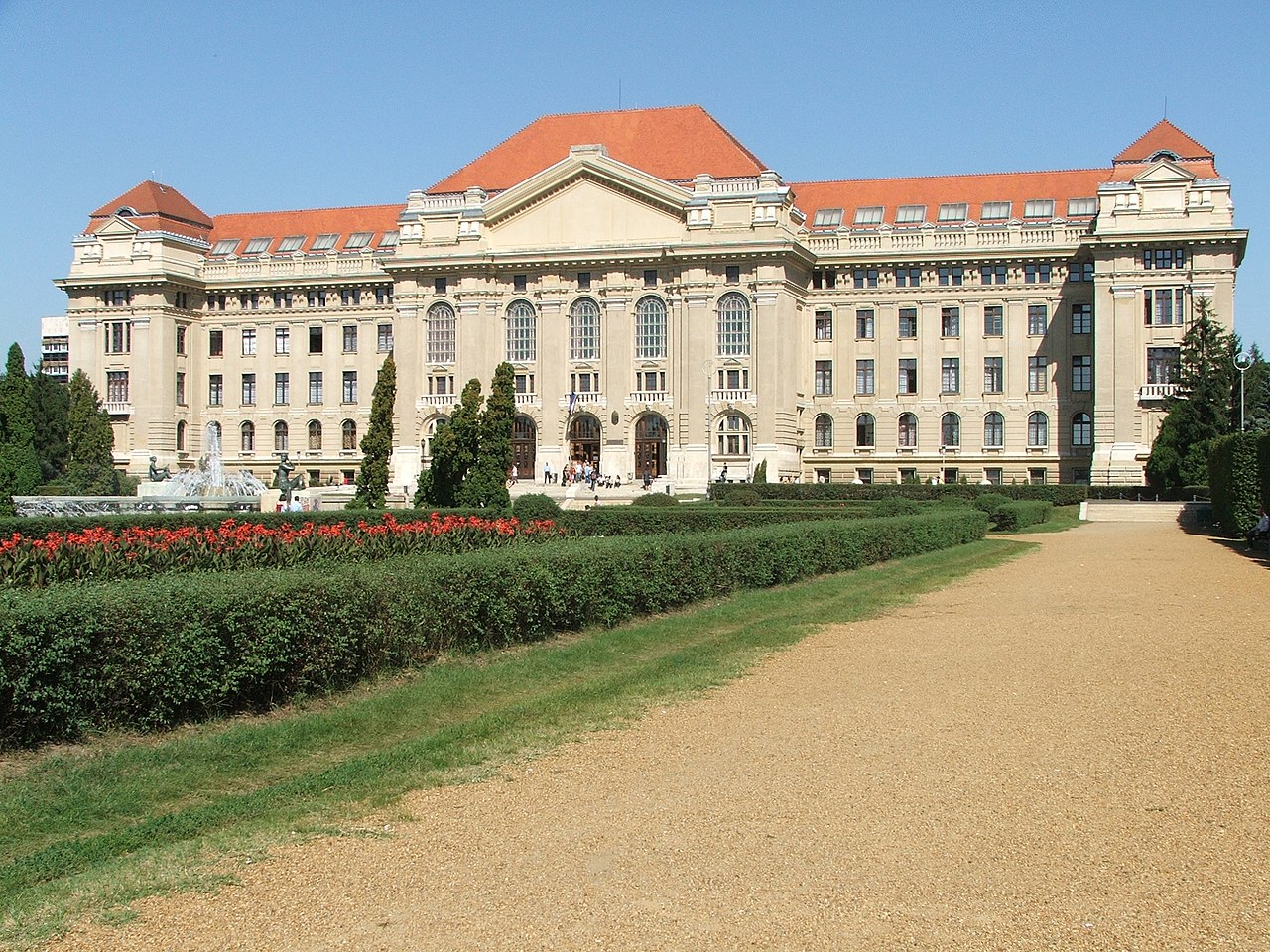


What is the capital of Hungary?
The capital of Hungary is Budapest.

Photo: Visions of Domino · CC BY 2.0
Hungary is in Central Europe, Europe, with Budapest as its capital. Use this guide for trip planning — best time, budget ranges, cities and practical tips.
This Hungary travel guide covers the best time to visit, top cities, sample routes, budget ranges and how to travel to Hungary — including visa requirements.
Most first-time trips to Hungary work in 10–14 days: fly into Budapest, then move only as far as your energy allows. A practical first loop is Budapest → Buda → Pest → Szentendre → Vác → Gödöllő. Mid-range travellers typically budget $55–130 per person per day on the ground (flights extra). Best time: May–June & September–October for mild weather and thinner crowds. This route, cost band and city shortlist are Global Itinerary’s own planning layer — not a copy of another guidebook.
Capital
Budapest
Population
9.8M
Currency
Ft · Hungarian forint (HUF)
Languages
Hungarian
Timezone
Europe/Budapest · UTC+02:00
Calling code
+36
Hungary has a rich history shaped by its position in Europe and the cultures of Central Europe, leaving a legacy visible in its landmarks, cities and traditions today.
Culture in Hungary is expressed through its food, festivals, music and daily rhythms — a warm invitation to experience local life first-hand.
May–June & September–October for mild weather and thinner crowds
Recognised refugees and stateless persons in possession of a valid travel document issued by the government of any one of the above countries/territories are exempt from obtaining a visa for Hungary (but no other Schengen country, except Germany and, for refugees, Slovakia) for a maximum stay of 90 days in a 180-day period.
The Hungarian currency is the forint, denoted by the symbol "Ft" (ISO code: HUF). Notes come in denominations of 500, 1,000, 2,000, 5,000, 10,000 and 20,000 forint; coins are available in denominations of 5, 10, 20, 50, 100 two-coloured, similar to €2) and 200 (two-coloured, similar to €1) forint.
Hungary has no regular domestic flights. As Budapest lies in the centre of the country and pretty much any point can be reached within three hours by train or bus, there isn't much need for scheduled domestic flights.
in both the current (Roman) and the ancient Hungarian scripts—the latter of which, also called rovásírás or the "Hungarian runes," is only used ceremonially or as a sign of national pride]] Hungarians are rightly proud of their unique, complex, sophisticated, richly expressive language, Hungarian (Magyar pronounced "mohdyohr"). It is a Uralic language most closely related to Mansi and Khanty of western Siberia. It is further sub-classified into the Finno-Ugric languages which include Finnish and…
Hungary in general is a very safe country. However, petty crime in particular remains a concern, just like in any other country. Watch your bags and pockets on public transport. There is a danger of pickpockets. Passports, cash and credit cards are common targets of thieves. Keep items that you do not store in your hotel safe or residence in a safe place, but be aware that pockets, purses and backpacks are especially vulnerable, even if closed. There are also reported cases of people who got their baggage stolen while sleeping on the train.
Food and water is generally safe, even in remote villages. It is safe to drink tap water anywhere, even in remote areas, however, due to the cleaning process the taste of the water can be really unpleasant. Best idea is to try before changing to the bottled water. Bottled waters has a large selection, both the fizzy (blue bottle cap) and still (red/pink bottle cap) water and it is cheap (starts from less than 100 Ft for 1.5 litre). The only notable exception of the drinking water are trains where the tap water is not drinkable and other places where tap water is labeled as such.
There are 4G coverage in most of the country while 5G is being deployed (July 2024).
Names
Uniquely in Europe, Hungary uses the Eastern name order, i.e. the family name precedes the given name. For example, someone named Kovács István has the family name Kovács ("Smith") and the given name István ("Stephen"). However, most Hungarians change their name order when talking or writing in a foreign language, like István Kovács. Foreign names are also kept in the original order (like John Travolta; but for an originally Eastern name, the Eastern order is retained, like for Abe Shinzo). In official documents (and sometimes elsewhere), your name might get changed to the Easter…
Practical guidance for Hungary is summarised from Wikivoyage (CC BY-SA). Always confirm official visa, health and safety requirements before you travel.
Estonian rival to Uber, typically 10–20% cheaper; also e-scooters and bikes.
Uber doesn't operate — Bolt or the official Főtaxi are the way to go in Budapest.
Yettel / Vodafone / Telekom
Prepaid 'Praktikum'/tourist SIMs with data.
eSIM (Airalo / Holafly) lets you get online the moment you land — handy if you don't want to queue for a SIM.
Prices and app coverage change often — figures are indicative for 2026, so confirm the current tourist plan in the app or at the airport kiosk.
A suggested loop connecting Hungary's major cities by proximity — a practical order for a multi-city trip.
Photos: Visions of Domino, Michel Wolgemut, Wilhelm Pleydenwurff (Text: Hartmann Schedel), Björn Láczay, Szilas — via Wikimedia Commons
Typical mid-range for Hungary
Estimated total (USD)
$2,145
≈ $1,073 per person · $306 per day group total
Ground costs ≈ $90/person/day (lodging + food + transport + activities)
Defaults match Hungary's mid-range daily budget ($55–130 per person on the ground). Flights are a separate estimate and vary by origin.
The capital of Hungary is Budapest.
May–June & September–October for mild weather and thinner crowds.
Yes — travellers visit Hungary for its landscapes, cities and culture. Start with Budapest, then explore the top regions on this Hungary travel guide for a realistic itinerary.
Visa rules for Hungary depend on your passport — use the visa checker on this site for a nationality-specific answer. Use our Hungary visa checker for rules by nationality before you book flights.
Budget roughly $55–130 per person per day for mid-range travel in Hungary, not including long-haul flights. Costs vary by season and how much you move between cities.
Check current travel advice for Hungary before you go.


