What is the capital of Serbia?
The capital of Serbia is Belgrade.
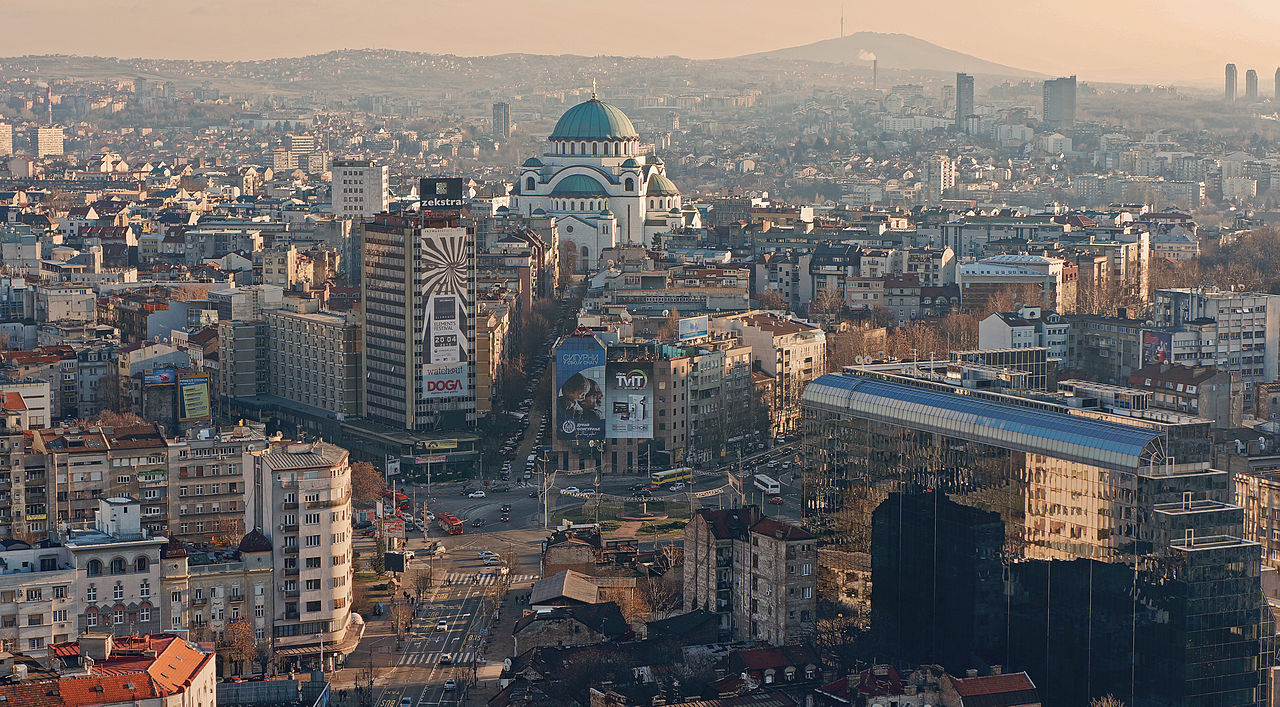
Photo: ZlatanJovanovic · CC BY 3.0
A Serbia travel guide for visitors who want Belgrade energy, Novi Sad festivals and historic fortress towns along the Danube. Plan visiting Serbia with this overview of seasons, budgets and easy city-to-city routes.
This Serbia travel guide covers the best time to visit, top cities, sample routes, budget ranges and how to travel to Serbia — including visa requirements.
Most first-time trips to Serbia work in 7–10 days: fly into Belgrade, then move only as far as your energy allows. A practical first loop is Belgrade → Zemun → Novi Sad → Subotica → Čačak → Kragujevac. Mid-range travellers typically budget $45–130 per person per day on the ground (flights extra). Best time: May–June and September–October; July for EXIT Festival in Novi Sad. This route, cost band and city shortlist are Global Itinerary’s own planning layer — not a copy of another guidebook.
Capital
Belgrade
Population
7.0M
Currency
RSD · Serbian dinar (RSD)
Languages
Serbian
Timezone
Europe/Belgrade · UTC+02:00
Calling code
+381
Serbia has a rich history shaped by its position in Europe and the cultures of Southeast Europe, leaving a legacy visible in its landmarks, cities and traditions today.
Culture in Serbia is expressed through its food, festivals, music and daily rhythms — a warm invitation to experience local life first-hand.
May–June and September–October; July for EXIT Festival in Novi Sad
Foreign nationals of the following countries/territories can enter Serbia visa-free (Government website): Citizens of the following countries can enter and stay up to 90 days in 6 months with their National ID card: Austria, Belgium, Bosnia and Herzegovina, Bulgaria, Croatia, Cyprus, Czech Republic, Denmark, Estonia, Finland, France, Germany, Greece, Hungary, Iceland, Ireland, Italy, Latvia, Lithuania, Luxembourg, Malta, Montenegro, Netherlands, North Macedonia, Norway, Poland, Portugal, Romania, Slovakia, Slovenia, Spain, Sweden, Switzerland, United Kingdom.
The currency in Serbia is the dinar (denoted by РСД or динар, pl. dinari/динари). The ISO currency code is RSD. Coins of Serbia are minted in denominations of 1, 2, 5, 10, and 20 dinars, and banknotes are printed in denominations of 10, 20, 50, 100, 200, 500, 1,000, 2,000, and 5,000 dinars. The banknotes tend to be more common than the coins, so be prepared to carry around a large number of banknotes in varying conditions.
Public transportation is generally not in very good shape outside of Belgrade. Trams and newer buses are exclusive to the capital, while intercity transport and transport within other smaller cities and towns uses older buses or more expensive minibuses. The coverage, however, is still pretty good in other towns as well. The quality of public transport within Belgrade itself is good and has vastly improved lately as most of the bus fleet was replaced by brand new gas powered buses.
The official language is Serbian, which is similar to Croatian and Bosnian, and mutually intelligible with them to a very high degree. Before the era of nationalist linguistic policies and the breakup of the former Yugoslavia, all of these dialects were known as Serbo-Croatian. Today, people in the former Yugoslavia no longer use this general term for what remains essentially a common language.
Serbia is generally a safe place to visit. The locals are incredibly polite and helpful in case you require any assistance. (If you need any help finding/reaching a place, it's best to ask a younger person for help, as they are more likely to speak English.) However, you should always be aware of pickpockets, mainly in crowded tourist places and on public transportation. Street robberies, assaults or murders are highly unusual, even in dark or remote parts of a city/town. One should always watch out for drivers, who can be very rude to pedestrians or cyclists. There is also widespread intolera…
Tap water is generally safe to drink, and mainly of a good quality, too, albeit heavily chlorinated in some areas. Urban areas (especially Belgrade) should be noted for their particularly hard water, which gives the water a cloudy look that dissipates after a couple of seconds. There are also many springs and fountains with excellent-quality drinking water - the most popular ones being the fountain on Knez Mihailova in Belgrade, and the many fountains in the city of Nis.
Serbia is quite well connected, and coverage is very good, even in rural areas. There are three GSM/UMTS/4G LTE mobile phone networks in Serbia: the state telecom provider mts, and the privately-owned Yettel and A1, all of them offering similar quality of service.
Serbs are a very friendly, polite and hospitable people, especially in the southern parts of the country. When you are invited into a Serbian home, make sure to bring them a gift if you are coming for the first time. Anything is fine from flowers to chocolate or something representative from your country. When you arrive at a rural house, take off your shoes unless the owner explicitly tells you to keep them on. When inside the house, don't ask for anything, for they will surely offer it. If you are thirsty it is polite to ask for a glass of water. The host probably forgot to offer you a drink…
Practical guidance for Serbia is summarised from Wikivoyage (CC BY-SA). Always confirm official visa, health and safety requirements before you travel.
Cheap, reliable cars across Russia, the Caucasus and Central Asia.
Serbia's local ride app (Belgrade).
CarGo is the local app in Belgrade; Yandex also operates.
A1 / Telekom Srbija (MTS) / Yettel
Cheap prepaid SIMs with data.
eSIM (Airalo / Holafly) lets you get online the moment you land — handy if you don't want to queue for a SIM.
Prices and app coverage change often — figures are indicative for 2026, so confirm the current tourist plan in the app or at the airport kiosk.
A suggested loop connecting Serbia's major cities by proximity — a practical order for a multi-city trip.
Explore Belgrade

Serbia

Serbia

Serbia
Serbia

Serbia
.jpg?width=1920)
Serbia

Serbia
9 cities — grouped A–Z so you can scan without loading every photo.
Photos: ZlatanJovanovic, Bybbisch94, Christian Gebhardt, Petar Milošević, Струјајое, Forgivenday — via Wikimedia Commons
Typical mid-range for Serbia
Estimated total (USD)
$2,145
≈ $1,073 per person · $306 per day group total
Ground costs ≈ $90/person/day (lodging + food + transport + activities)
Defaults match Serbia's mid-range daily budget ($45–130 per person on the ground). Flights are a separate estimate and vary by origin.
The capital of Serbia is Belgrade.
May–June & September–October for mild weather and thinner crowds.
Yes — travellers visit Serbia for its landscapes, cities and culture. Start with Belgrade, then explore the top regions on this Serbia travel guide for a realistic itinerary.
Visa rules for Serbia depend on your passport — use the visa checker on this site for a nationality-specific answer. Use our Serbia visa checker for rules by nationality before you book flights.
Budget roughly $45–130 per person per day for mid-range travel in Serbia, not including long-haul flights. Costs vary by season and how much you move between cities.
Generally safe for travellers in major cities — use normal nightlife precautions.


