What is the capital of Switzerland?
The capital of Switzerland is Bern.

Switzerland is in Western Europe, Europe, with Bern as its capital. Use this guide for trip planning — best time, budget ranges, cities and practical tips.
This Switzerland travel guide covers the best time to visit, top cities, sample routes, budget ranges and how to travel to Switzerland — including visa requirements.
Most first-time trips to Switzerland work in 10–14 days: fly into Bern, then move only as far as your energy allows. A practical first loop is Bern → Thun → Spiez → Matten → Interlaken → Wengen. Mid-range travellers typically budget $180–350 per person per day on the ground (flights extra). Best time: May–June & September–October for mild weather and thinner crowds. This route, cost band and city shortlist are Global Itinerary’s own planning layer — not a copy of another guidebook.
Capital
Bern
Population
8.5M
Currency
CHF · Swiss franc (CHF)
Languages
French, Swiss German, Italian, Romansh
Timezone
Europe/Zurich · UTC+02:00
Calling code
+41
Switzerland has a rich history shaped by its position in Europe and the cultures of Western Europe, leaving a legacy visible in its landmarks, cities and traditions today.
Culture in Switzerland is expressed through its food, festivals, music and daily rhythms — a warm invitation to experience local life first-hand.
May–June & September–October for mild weather and thinner crowds
Switzerland is not a member of the EU, however. Therefore, travellers entering Switzerland from the EU are subject to customs controls even if there are no immigration controls, and persons travelling elsewhere in the Schengen Area will also have to clear customs. On the other hand, Switzerland maintains a customs union with Liechtenstein, and there are no customs controls when travelling between the two countries.
Switzerland's currency is the Swiss franc (or Franken, or franc, or franco, depending on which language area you are in), denoted by the symbol "Fr." or sometimes "SFr." (ISO code: CHF) It is divided into 100 Rappen, centimes, or centesimi. However, some places – such as supermarkets, restaurants, tourist attraction ticket counters, hotels and the railways or ticket machines – accept euro bills (but no coins) and will give you change in Swiss francs or in euro if they have it in cash.
Getting around Switzerland is quick and easy, albeit sometimes on the expensive side, no matter which mode you choose. The country has had a love affair with railways for over a century now, despite having been something of a late bloomer in railway construction. The few places not served by trains are served by the "Postauto" bus system and everything is seamlessly integrated, meaning you'll never have to wait long. Should you wish to drive a car, there are excellent highways throughout the country and many mountains are bypassed with tunnels. Hiking paths across the Alps have existed for cen…
Switzerland has four official languages: German, French, Italian, and Romansch. Many Swiss people are multilingual. German is spoken by almost two-thirds of the population and you can find a German speaker almost everywhere; it has official status in 21 cantons, making it the most useful of the country's four official languages. Swiss German (Schweizerdeutsch), which is used in most informal contexts, is not one language, but rather a group of Alemannic dialects spoken in Switzerland. Although p…
Switzerland is one of the safest countries in the world as far as crime goes, but any place that attracts Rolex-wearing bankers and crowds of distracted tourists will also bring out a few pickpockets. Keep an eye on belongings, especially in the midst of summer crowds. Generally, you are safe anywhere at any time. If, for any reason, you feel threatened, seek a nearby restaurant. The emergency phone number in Switzerland is 112, and operators generally speak English.
Generally there is no problem with food and water in Switzerland. Restaurants are controlled by strict rules. Water is drinkable everywhere, even out of every tap, especially so of public fountains, unless explicitly marked with "Kein Trinkwasser", "Non potable" or "Non potabile". Do not drink from temporarily installed trough on a meadow in order to water the cattle served by the close-by brook.
Many of the internet cafes that have emerged in the 1990s have closed because Switzerland has one of the highest rates of high-speed internet connections in homes in the world, but there may be a few internet terminals in some large train stations. The tourist office should be able to direct you to the nearest one. The usual rate is Fr. 5 for 20 minutes.
The Swiss adhere to a robust set of values. They value and cherish cleanliness, integrity, world peace, organisation, and responsibility. Communication styles vary from canton to canton, but generally speaking, the Swiss are comfortable with expressing their thoughts and ideas openly and clearly. German-speaking Swiss people tend to be more direct and formal than their French-speaking, Romansh-speaking, and Italian-speaking counterparts.
Practical guidance for Switzerland is summarised from Wikivoyage (CC BY-SA). Always confirm official visa, health and safety requirements before you travel.
App-based cars with upfront fares — usually the cheapest metered ride in big cities.
Estonian rival to Uber, typically 10–20% cheaper; also e-scooters and bikes.
Trains cover everything — a Swiss Travel Pass is usually better value than taxis.
Salt / Yallo / Lebara
Cheapest prepaid data SIMs (Swisscom has the best coverage but costs more).
eSIM (Airalo / Holafly) lets you get online the moment you land — handy if you don't want to queue for a SIM.
Prices and app coverage change often — figures are indicative for 2026, so confirm the current tourist plan in the app or at the airport kiosk.
A suggested loop connecting Switzerland's major cities by proximity — a practical order for a multi-city trip.

Lake views, old town and Alpine gateway
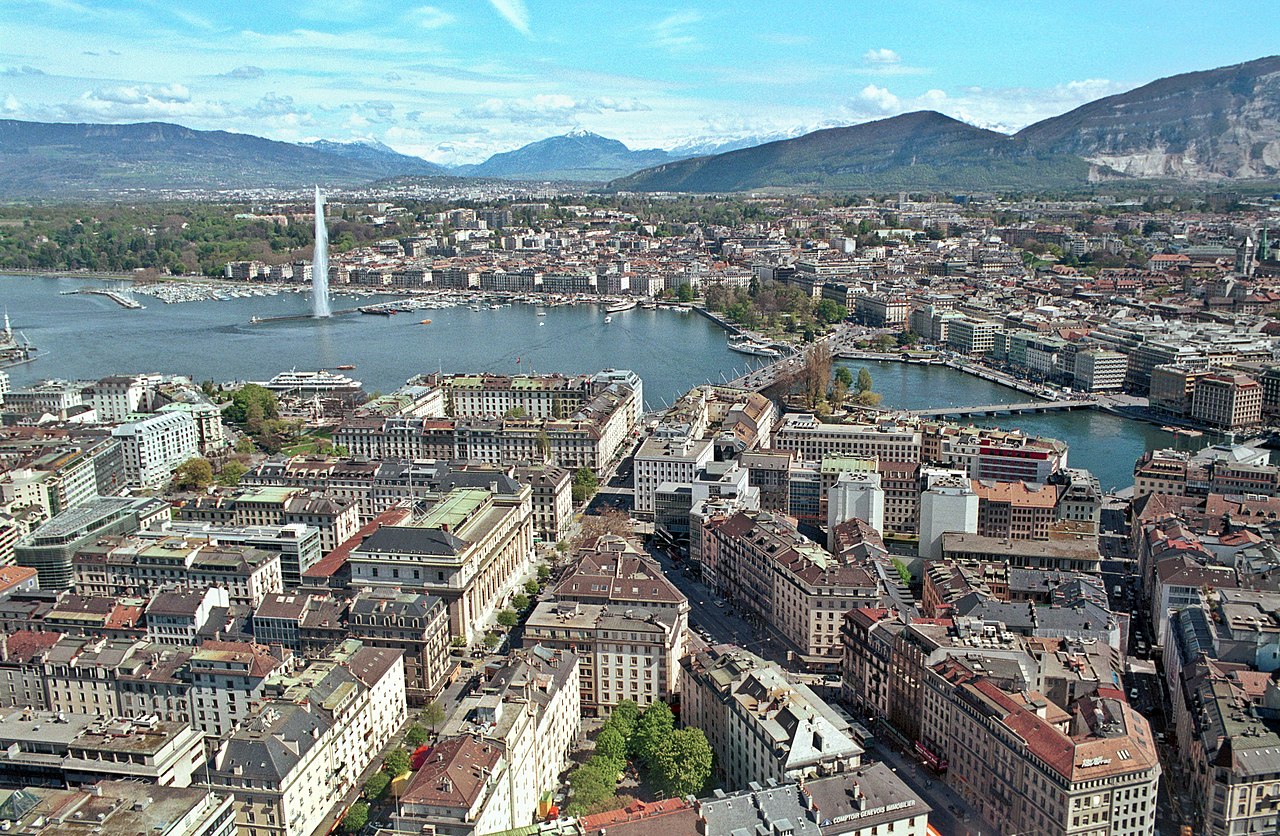
Switzerland

Switzerland

Switzerland

Switzerland

Switzerland

Switzerland

Switzerland
83 cities — grouped A–Z so you can scan without loading every photo.
Typical mid-range for Switzerland
Estimated total (USD)
$3,965
≈ $1,983 per person · $566 per day group total
Ground costs ≈ $265/person/day (lodging + food + transport + activities)
Defaults match Switzerland's mid-range daily budget ($180–350 per person on the ground). Flights are a separate estimate and vary by origin.
The capital of Switzerland is Bern.
May–June & September–October for mild weather and thinner crowds.
Yes — travellers visit Switzerland for its landscapes, cities and culture. Start with Bern, then explore the top regions on this Switzerland travel guide for a realistic itinerary.
Visa rules for Switzerland depend on your passport — use the visa checker on this site for a nationality-specific answer. Use our Switzerland visa checker for rules by nationality before you book flights.
Budget roughly $180–350 per person per day for mid-range travel in Switzerland, not including long-haul flights. Costs vary by season and how much you move between cities.
Check current travel advice for Switzerland before you go.


