


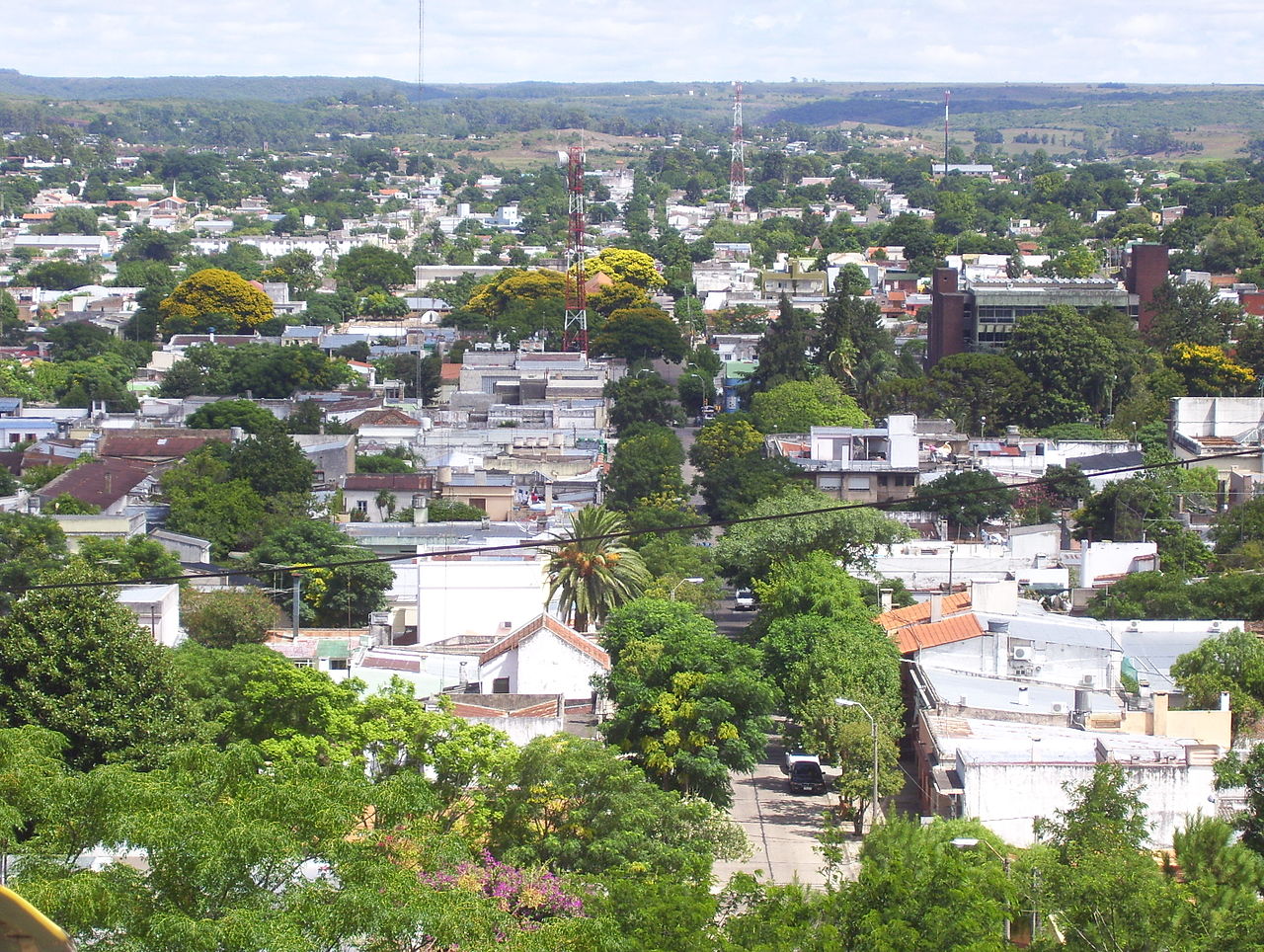

What is the capital of Uruguay?
The capital of Uruguay is Montevideo.
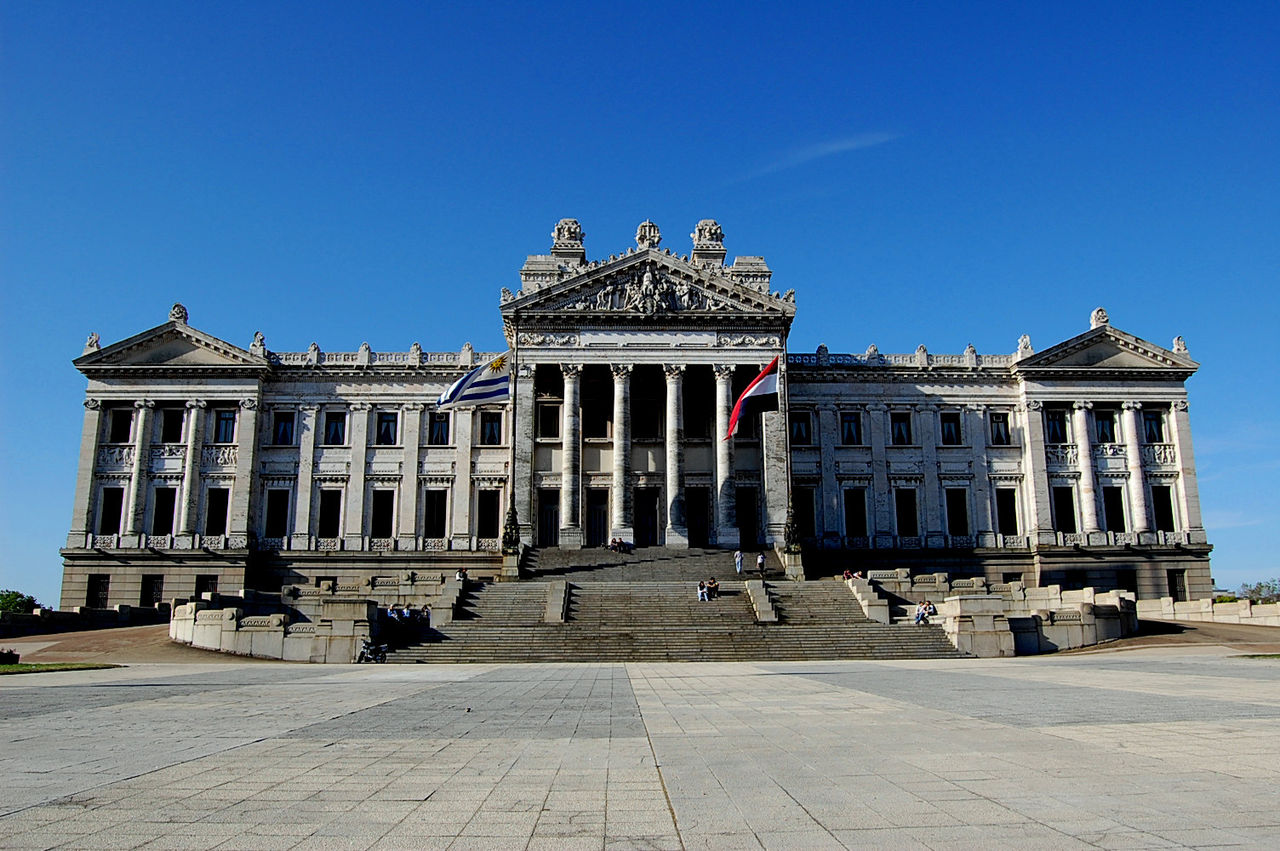
Photo: Eduardo Ruggieri · CC BY-SA 3.0
Uruguay is in South America, South America, with Montevideo as its capital. Use this guide for trip planning — best time, budget ranges, cities and practical tips.
This Uruguay travel guide covers the best time to visit, top cities, sample routes, budget ranges and how to travel to Uruguay — including visa requirements.
Most first-time trips to Uruguay work in 7–10 days: fly into Montevideo, then move only as far as your energy allows. A practical first loop is Montevideo → Las Piedras → Maldonado → Punta del Este → Colonia del Sacramento → Paysandú. Mid-range travellers typically budget $55–140 per person per day on the ground (flights extra). Best time: The dry season (roughly May–September) is ideal for most regions. This route, cost band and city shortlist are Global Itinerary’s own planning layer — not a copy of another guidebook.
Capital
Montevideo
Population
3.4M
Currency
$ · Uruguayan peso (UYU)
Languages
Spanish
Timezone
America/Montevideo · UTC-03:00
Calling code
+598
Uruguay has a rich history shaped by its position in Americas and the cultures of South America, leaving a legacy visible in its landmarks, cities and traditions today.
Culture in Uruguay is expressed through its food, festivals, music and daily rhythms — a warm invitation to experience local life first-hand.
The dry season (roughly May–September) is ideal for most regions
Visa requirements
Citizens of Mercosur member states ― Argentina, Bolivia, Brazil, Chile, Colombia, Ecuador, Paraguay, and Peru ― enjoy freedom of movement in Uruguay. They can just enter with their National ID card.
The Uruguayan currency is the peso (ISO code: UYU). Prices are quoted using the U$ symbol, which may be easily confused with the US dollar symbol. Prices on costlier goods and services (over US$100, generally speaking) are often quoted in American dollars instead of pesos, and US dollars are surprisingly widely accepted even at some fast food restaurants. Places that cater to foreign visitors often also accept Argentinian pesos or Brazilian reals. All of these currencies use the symbol "$", so check which currency the prices are in if you're unsure.
There are limited commuter train services around Montevideo, provided by the Administración de Ferrocarriles del Estado. As of Jan 2025, the commuter train is inactive due modernization of the tracks. There are some tourist trains which do not have a fixed schedule. You need to find announcements for them at the Montevideo train station, located at the corner of Nicaragua and Paraguay. There is, except a slow train connection between Taucarembó and Rivera in the far north, no regular long distance train service. The most usual means of public transport is the bus (local buses inside Montevideo…
Spanish is the country's official and national language. The pronunciation and the use of the vos pronoun instead of tú is practically the same as the Spanish variety spoken in Argentina, also known as Rioplatense Spanish. However it is remarkably different from the Spanish spoken in Spain when it comes to pronunciation, grammar and vocabulary. If you are not familiar with the local dialect, be prepared to regularly having to ask people you're talking with to repeat themselves.
Historically, Uruguay used to enjoy a low rate of violent crime compared to some of its neighbors. However, this does not mean that Uruguay is crime free. The major differences are that most Uruguayan crimes are either nonconfrontational or do not involve the gratuitous use of firearms. Montevideo in particular has seen its crime rate gradually rise since the severe 2001-2002 financial crisis, and now has moderately high levels of theft, burglary, and robbery similar to those found in major U.S. cities. Fortunately, Punta del Este and most rural areas continue to enjoy relatively low crime lev…
Uruguay has one of the best healthcare systems in South America; most medical facilities are comparable to US standards and the country has one of the highest life expectancies on the continent. Tap water is safe to drink in all major cities, though most locals prefer to drink bottled water. That said, if your hotel or host tells you to drink bottled water, you should follow their instructions—some houses have water storage tanks that may not be completely clean.
Telephone
The national landline telephone monopoly is Antel, which provides all public pay phones and is also the sole provider of landline Internet service. Although Antel pay phones only take Antel's proprietary magnetic cards (that are difficult if not impossible to obtain), it is possible to use international calling cards to call home by taking the phone off the hook, waiting for a dial tone, and dialing the correct access code. However, note that many public pay phones are not proper…
Uruguay is a socially progressive country. Women got the vote in Uruguay 12 years before France. Uruguay is a secular state unlike Argentina, Chile or Paraguay; the Uruguayan state has not supported any religion since 1917. Even national holidays are officially referred to with secular names—the week before Easter is officially "Tourism Week" and December 25th is "Family Day"! The population is mainly Catholic, but not very practicing.
Practical guidance for Uruguay is summarised from Wikivoyage (CC BY-SA). Always confirm official visa, health and safety requirements before you travel.
Antel / Claro / Movistar
Cheap prepaid tourist SIMs with data.
eSIM (Airalo / Holafly) lets you get online the moment you land — handy if you don't want to queue for a SIM.
Prices and app coverage change often — figures are indicative for 2026, so confirm the current tourist plan in the app or at the airport kiosk.
A suggested loop connecting Uruguay's major cities by proximity — a practical order for a multi-city trip.
Photos: Eduardo Ruggieri, CITY MVD, Fedaro, Maximasu, Fulviusbsas, Juan Manuel Blanes — via Wikimedia Commons
Typical mid-range for Uruguay
Estimated total (USD)
$2,180
≈ $1,090 per person · $311 per day group total
Ground costs ≈ $95/person/day (lodging + food + transport + activities)
Defaults match Uruguay's mid-range daily budget ($55–140 per person on the ground). Flights are a separate estimate and vary by origin.
The capital of Uruguay is Montevideo.
The dry season (roughly May–September) is ideal for most regions.
Yes — travellers visit Uruguay for its landscapes, cities and culture. Start with Montevideo, then explore the top regions on this Uruguay travel guide for a realistic itinerary.
Visa rules for Uruguay depend on your passport — use the visa checker on this site for a nationality-specific answer. Use our Uruguay visa checker for rules by nationality before you book flights.
Budget roughly $55–140 per person per day for mid-range travel in Uruguay, not including long-haul flights. Costs vary by season and how much you move between cities.
Check current travel advice for Uruguay before you go.


