.jpg?width=1920)


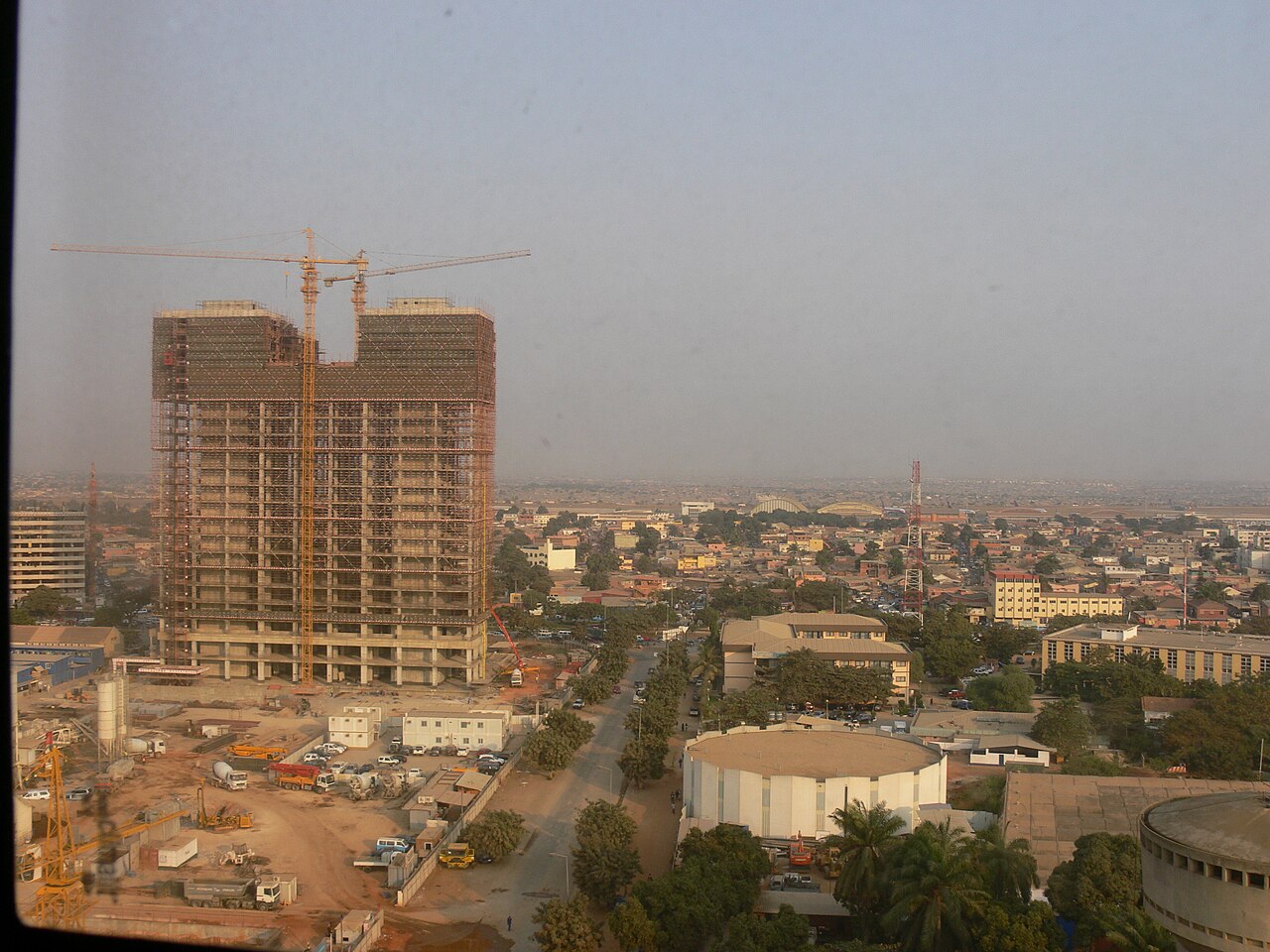


What is the capital of Angola?
The capital of Angola is Luanda.

Photo: Iamdelcioborges · CC BY 4.0
Angola is in Middle Africa, Africa, with Luanda as its capital. Use this guide for trip planning — best time, budget ranges, cities and practical tips.
This Angola travel guide covers the best time to visit, top cities, sample routes, budget ranges and how to travel to Angola — including visa requirements.
Most first-time trips to Angola work in 7–10 days: fly into Luanda, then move only as far as your energy allows. A practical first loop is Luanda → Maianga → Camama → Mulenvos → Viana → Kikolo. Mid-range travellers typically budget $40–100 per person per day on the ground (flights extra). Best time: The dry season offers the best wildlife viewing and travel comfort. This route, cost band and city shortlist are Global Itinerary’s own planning layer — not a copy of another guidebook.
Capital
Luanda
Population
30.8M
Currency
Kz · Angolan kwanza (AOA)
Languages
Portuguese
Timezone
Africa/Luanda · UTC+01:00
Calling code
+244
Angola has a rich history shaped by its position in Africa and the cultures of Middle Africa, leaving a legacy visible in its landmarks, cities and traditions today.
Culture in Angola is expressed through its food, festivals, music and daily rhythms — a warm invitation to experience local life first-hand.
Passport holders of the following countries do not need a visa to enter Angola: Mozambique, Namibia, São Tomé and Príncipe, South Africa, Zambia. Since September 2023, Angola allows visa-free travel for a period of up to 30 days per entry and 90 days per year to visitors from the following countries: Algeria, Antigua and Barbuda, Argentina, Australia, Austria, Bahamas, Barbados, Belgium, Belize, Botswana, Brazil, Bulgaria, Canada, Cape Verde, Chile, China, Cook Islands, Croatia, Cyprus, Czech Republic, Denmark, Dominican Republic, Equatorial Guinea, Estonia, Eswatini, Fiji, Finland, France, Ge…
The currency of Angola is the Angolan kwanza, denoted by the symbol "Kz" (ISO code: AOA). It used to be prohibited to import or export any sum of kwanza, but now travellers can take up to Kz50,000 out of the country. The kwanza (sometimes called the "new kwanza") replaced the kwanza reajustado at a rate of 1000:1 in 1995. The kwanza reajustado had replaced the novo kwanza at a rate of 1,000,000:1 in 1990. Watch out for old notes and coins.
By bus
There are many private bus companies which offer services as Macon and Huambo Expresso being the biggest ones. Those companies offer a wide range of services dealing with locations one wants to travel, especially inter-provincial courses. There are lines that connect most of the major cities of the country, from the coast to the interior. Local minibus transport is not safe.
Portuguese is the official language of Angola, the second-largest Portuguese-speaking country in the world, and is understood by virtually everyone. For clarity, Angolans speak standard Portuguese (European Portuguese).
You should consider hiring a trusted and knowledgeable local guide for travel within Angola, although if you follow some basic rules then travelling in Angola isn't dangerous. Travelling after dark and alone is never a good idea. If possible, join with several cars of the same make and model because of the possible need of spare parts.
State-of-the-art medical care is virtually non-existent in Angola; the country has one of the lowest average life expectancies in the world, the country is ideal for many tropical diseases, and a significant portion of Angolans are too poor to afford healthcare.
The phone country code of Angola is +244. Telephone connections, cellular and landline, are heavily overloaded, making communication difficult at times. International lines are, however, often better.
Since Angola is rarely visited by tourists, you may attract unwanted attention from the locals. This indicates curiosity rather than hostility. As is the case throughout Africa, it is obligatory to show respect for elders (including authority figures) as they're generally viewed as wiser and more experienced. When visiting an Angolan home, it is customary to greet the oldest person first. If you're waiting to enter a building, allow someone older to go in first. If you're on public transportation, give up your seat for someone older than you.
Practical guidance for Angola is summarised from Wikivoyage (CC BY-SA). Always confirm official visa, health and safety requirements before you travel.
Estonian rival to Uber, typically 10–20% cheaper; also e-scooters and bikes.
Yandex's international brand — cheap cars across Africa and the Middle East.
Name your own fare and let nearby drivers accept or counter — great for tight budgets.
Ride-hailing coverage varies here — check whether these apps are live in your city before relying on them.
Local prepaid SIM
Buy a tourist SIM from an official operator kiosk at the airport (bring your passport) — usually the cheapest data.
eSIM (Airalo / Holafly) lets you get online the moment you land — handy if you don't want to queue for a SIM.
Prices and app coverage change often — figures are indicative for 2026, so confirm the current tourist plan in the app or at the airport kiosk.
A suggested loop connecting Angola's major cities by proximity — a practical order for a multi-city trip.
Photos: Iamdelcioborges, Manuel Dohmen, Guilherme Paes de Menezes, Ernmuhl, Rob Mieremet (ANEFO) — via Wikimedia Commons
Typical mid-range for Angola
Estimated total (USD)
$1,935
≈ $968 per person · $276 per day group total
Ground costs ≈ $70/person/day (lodging + food + transport + activities)
Defaults match Angola's mid-range daily budget ($40–100 per person on the ground). Flights are a separate estimate and vary by origin.
The capital of Angola is Luanda.
The dry season offers the best wildlife viewing and travel comfort.
Yes — travellers visit Angola for its landscapes, cities and culture. Start with Luanda, then explore the top regions on this Angola travel guide for a realistic itinerary.
Visa rules for Angola depend on your passport — use the visa checker on this site for a nationality-specific answer. Use our Angola visa checker for rules by nationality before you book flights.
Budget roughly $40–100 per person per day for mid-range travel in Angola, not including long-haul flights. Costs vary by season and how much you move between cities.
Check current travel advice for Angola before you go.