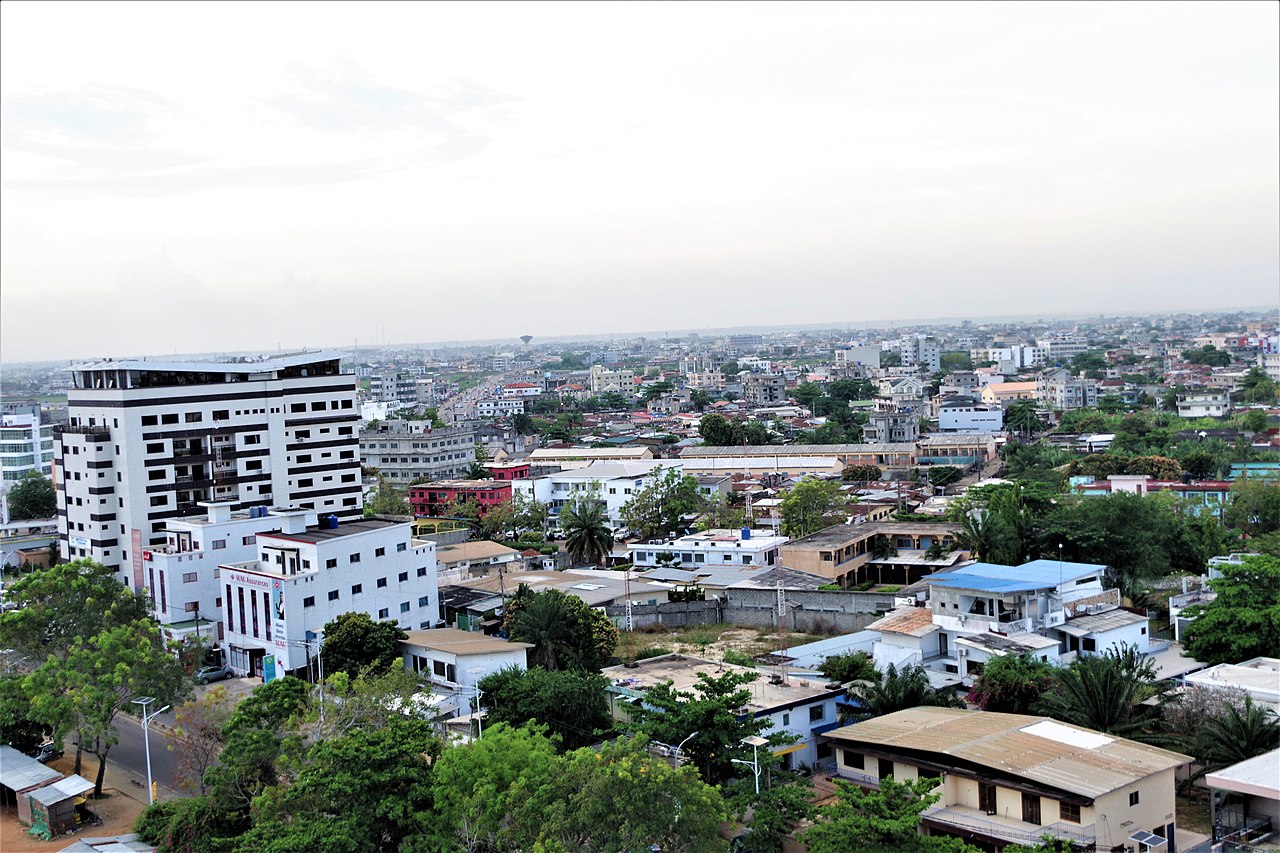
What is the capital of Cameroon?
The capital of Cameroon is Yaoundé.

Photo: Olivier Charly1 · CC BY-SA 4.0
Cameroon is in Middle Africa, Africa, with Yaoundé as its capital. Use this guide for trip planning — best time, budget ranges, cities and practical tips.
This Cameroon travel guide covers the best time to visit, top cities, sample routes, budget ranges and how to travel to Cameroon — including visa requirements.
Most first-time trips to Cameroon work in 7–10 days: fly into Yaoundé, then move only as far as your energy allows. A practical first loop is Yaoundé → Douala → Kribi → Bafoussam → Bamenda → Ngaoundéré. Mid-range travellers typically budget $40–100 per person per day on the ground (flights extra). Best time: The dry season offers the best wildlife viewing and travel comfort. This route, cost band and city shortlist are Global Itinerary’s own planning layer — not a copy of another guidebook.
Capital
Yaoundé
Population
25.2M
Currency
FCFA · Central African CFA franc (XAF)
Languages
English, French
Timezone
Africa/Douala · UTC+01:00
Calling code
+237
Cameroon has a rich history shaped by its position in Africa and the cultures of Middle Africa, leaving a legacy visible in its landmarks, cities and traditions today.
Culture in Cameroon is expressed through its food, festivals, music and daily rhythms — a warm invitation to experience local life first-hand.
Cameroon is not a country you can just come to. There are few visa-free arrangements in place, so most travelers need a visa. Citizens of Mali, Chad, the Central African Republic, Gabon, Equatorial Guinea, and Nigeria don't need a visa.
The currency of the country is the Central African CFA franc, denoted FCFA (ISO currency code: XAF). It's also used by five other Central African countries. It is interchangeable at par with the West African CFA franc (XOF), which is used by six countries. Both currencies are fixed at a rate of 1 euro = 655.957 CFA francs.
By plane
Camair-Co operates as a national carrier and on domestic flights.
By train
Rail services operated by Camrail, run from the capital, Yaoundé, to the port city of Douala and the northern city of Ngaoundéré. While bus service is quicker and more reliable to Douala, the overnight train is the best mode of ground transport to the north. Check for current schedules and pricing.
The two official languages of the country are French and English. Of the two, French is the more useful language (understood by 80% of Cameroonians and the first language for many Cameroonians) and will get you far.
As is the case in any developing country, you should do whatever you can to blend in with the local population. What this means is that you should avoid presenting yourself in a way that would get others to think you are rich, and you should most certainly avoid isolated areas and travelling alone at night.
As Cameroon is a developing country, health care facilities are poor and are much below Western standards. In addition, you should expect a language barrier at healthcare facilities if your French-language skills aren't good enough.
To make local and international calls you need to buy a pre-paid SIM card. Check if your cell phone has a compatible GSM standard (Africa/Europe) - if not, in addition to a SIM card you probably need to buy a new phone. "MTN" and "Orange" are two major telephone companies in Cameroon. E-SIMs are available for data connections from various companies such as Airalo and Ubigi. The local networks offer 4G connections which are neither fast or stable.
It is very common for people, including people you've never even met before, to greet people around them. You will easily observe that it's common for people to exchange greetings and say things like "good morning", "how's your health", "how is your family", and so on. Don't be fazed or surprised by this; this is how the Cameroonians get to know others, and you can very easily make a friend or two by following suit!
Practical guidance for Cameroon is summarised from Wikivoyage (CC BY-SA). Always confirm official visa, health and safety requirements before you travel.
Estonian rival to Uber, typically 10–20% cheaper; also e-scooters and bikes.
Yandex's international brand — cheap cars across Africa and the Middle East.
Name your own fare and let nearby drivers accept or counter — great for tight budgets.
Ride-hailing coverage varies here — check whether these apps are live in your city before relying on them.
Local prepaid SIM
Buy a tourist SIM from an official operator kiosk at the airport (bring your passport) — usually the cheapest data.
eSIM (Airalo / Holafly) lets you get online the moment you land — handy if you don't want to queue for a SIM.
Prices and app coverage change often — figures are indicative for 2026, so confirm the current tourist plan in the app or at the airport kiosk.
A suggested loop connecting Cameroon's major cities by proximity — a practical order for a multi-city trip.
Photos: Olivier Charly1, No machine-readable author provided. Eavebe assumed (based on copyright claims)., Geugeor, DDR237, Ruediger Nassauer — via Wikimedia Commons
Typical mid-range for Cameroon
Estimated total (USD)
$1,935
≈ $968 per person · $276 per day group total
Ground costs ≈ $70/person/day (lodging + food + transport + activities)
Defaults match Cameroon's mid-range daily budget ($40–100 per person on the ground). Flights are a separate estimate and vary by origin.
The capital of Cameroon is Yaoundé.
The dry season offers the best wildlife viewing and travel comfort.
Yes — travellers visit Cameroon for its landscapes, cities and culture. Start with Yaoundé, then explore the top regions on this Cameroon travel guide for a realistic itinerary.
Visa rules for Cameroon depend on your passport — use the visa checker on this site for a nationality-specific answer. Use our Cameroon visa checker for rules by nationality before you book flights.
Budget roughly $40–100 per person per day for mid-range travel in Cameroon, not including long-haul flights. Costs vary by season and how much you move between cities.
Check current travel advice for Cameroon before you go.