What is the capital of Namibia?
The capital of Namibia is Windhoek.

Photo: Christoph Strässler · CC BY-SA 2.0
Visit Namibia for some of Africa's most dramatic landscapes — Sossusvlei's red dunes, Etosha wildlife, Skeleton Coast fog and Swakopmund's adventure scene. This Namibia travel guide helps you plan travel to Namibia with realistic routes from Windhoek, best seasons and safari-friendly budgets.
This Namibia travel guide covers the best time to visit, top cities, sample routes, budget ranges and how to travel to Namibia — including visa requirements.
Most first-time trips to Namibia work in 7–10 days: fly into Windhoek, then move only as far as your energy allows. A practical first loop is Windhoek → Rehoboth → Sossusvlei → Sesriem → Walvis Bay → Swakopmund. Mid-range travellers typically budget $80–220 per person per day on the ground (flights extra). Best time: May–October dry season for wildlife and cooler desert nights; July–September peak for Etosha. This route, cost band and city shortlist are Global Itinerary’s own planning layer — not a copy of another guidebook.
Capital
Windhoek
Population
2.4M
Currency
$ · Namibian dollar (NAD)
Languages
Afrikaans, German, English, Herero, Khoekhoe, Kwangali, Lozi, Ndonga, Tswana
Timezone
Africa/Windhoek · UTC+02:00
Calling code
+264
Namibia has a rich history shaped by its position in Africa and the cultures of Southern Africa, leaving a legacy visible in its landmarks, cities and traditions today.
Culture in Namibia is expressed through its food, festivals, music and daily rhythms — a warm invitation to experience local life first-hand.
May–October dry season for wildlife and cooler desert nights; July–September peak for Etosha
Visas
Tourists must have a passport that has at least six months before being expired to enter. Based on Visit Namibia, for citizens of Angola, Botswana, Brazil, Cuba, Eswatini, Hong Kong, Indonesia, Jamaica, Kenya, Lesotho, Macau, Malawi, Malaysia, Mauritius, Mozambique, Russia, Seychelles, Singapore, South Africa, Tanzania, Zambia and Zimbabwe, no visa is required.
The currency of the country is the Namibian dollar, denoted by the symbol "$" or "N$" (ISO currency code: NAD). It is divided into 100 cents. Unlike elsewhere in Africa you cannot pay anything in US dollars or euro.
Legal issues
Travellers are expected to produce identification if police, health inspectors or customs officials stop them. A current passport or drivers license will do. Namibia is very concerned about child trafficking. When travelling with children you need to carry their full birth certificate to prove they are yours. When only one parent is travelling, a consent letter from the other parent (alternatively a death certificate) is required, even if you are married or have sole custody.
Major Indigenous languages include Oshiwambo, Otjiherero, Damara/Nama, various San languages, Rukwangali, and Silozi. English is the official language and is widely spoken. However, the majority of older Namibians (those educated before independence) speak English only as a third language; therefore, the standard is fairly poor. English is more widely spoken in the north, as it was adopted as a medium of instruction earlier than in the south. Older Namibians in the South are more likely to speak…
Namibia is a peaceful country and is not involved in any wars. Since the end of the Angolan civil war in May 2002, the violence that spilled over into northeastern Namibia is no longer an issue. Namibia is, however, a country with extreme income disparities. A middle manager easily earns twenty times the salary of a cleaner, and a third of the workforce is unemployed. As a tourist you're inevitably seen as stinking rich, and a prime target for thieves.
The HIV infection rate in Namibia is around 17%, which is lower than before but is still the leading cause of death in the country. Namibia's medical system is modern and capable of attending to whatever needs you may have. Staff are well trained and so HIV transmission in hospitals is not an issue. This applies to government and private hospitals alike, though line-ups are often shorter at private hospitals, and there have been cases of incorrect diagnosis in government hospitals. Should you become a victim of violence, private doctors and hospitals will send you away. The reason is that staf…
By phone
Namibia's country code is 264. Each city or region has a two-digit area code. When calling long distance within Namibia, prefix the area code with a '0'. There are still a few pay phone booths around the country but they are no longer maintained. When making an international call from a phone booth, bring plenty of coins. Such calls are still expensive in Namibia, and it requires some dexterity to stuff coins in fast enough to not be cut off.
Namibians are very proud of their nation. It is a well developed country (albeit still economically developing) with modern amenities and technologies. Namibians have been exposed to a surprisingly wide variety of peoples during the United Nations supervising of the elections, as well as from various volunteer organizations. As in many African countries, the further away you come from the more curiosity you are going to attract.
Practical guidance for Namibia is summarised from Wikivoyage (CC BY-SA). Always confirm official visa, health and safety requirements before you travel.
Namibia's local ride app (Windhoek).
LEFA is the local ride app in Windhoek; otherwise self-drive is the norm.
MTC / TN Mobile
Cheap prepaid tourist SIMs with data.
eSIM (Airalo / Holafly) lets you get online the moment you land — handy if you don't want to queue for a SIM.
Prices and app coverage change often — figures are indicative for 2026, so confirm the current tourist plan in the app or at the airport kiosk.
A suggested loop connecting Namibia's major cities by proximity — a practical order for a multi-city trip.
Namibia
Namibia

Namibia

Namibia

Namibia

Namibia

Namibia

Namibia
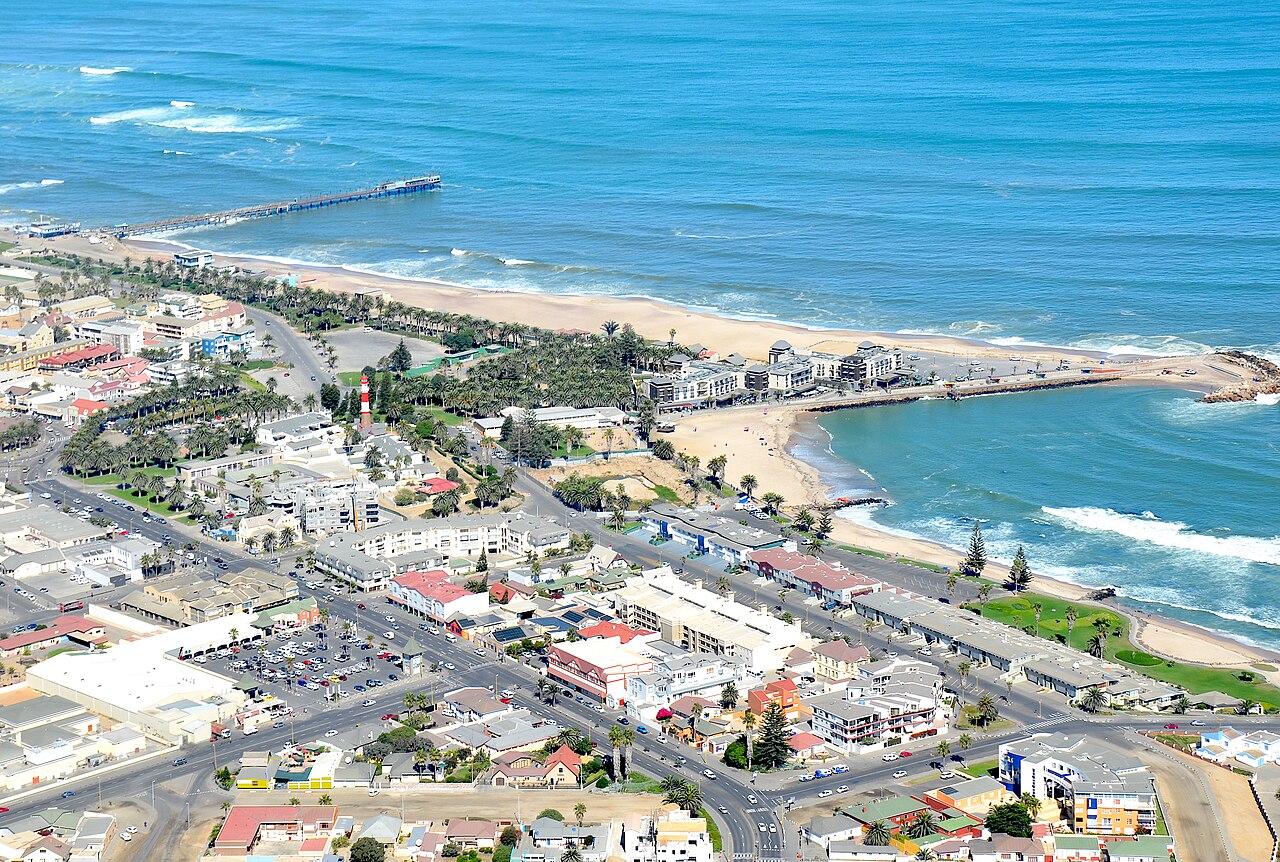
10 cities — grouped A–Z so you can scan without loading every photo.
Photos: Christoph Strässler, Hp.Baumeler, Brian McMorrow, Olga Ernst, Pemba.mpimaji — via Wikimedia Commons
Typical mid-range for Namibia
Estimated total (USD)
$2,775
≈ $1,388 per person · $396 per day group total
Ground costs ≈ $150/person/day (lodging + food + transport + activities)
Defaults match Namibia's mid-range daily budget ($80–220 per person on the ground). Flights are a separate estimate and vary by origin.
The capital of Namibia is Windhoek.
The dry season offers the best wildlife viewing and travel comfort.
Yes — travellers visit Namibia for its landscapes, cities and culture. Start with Windhoek, then explore the top regions on this Namibia travel guide for a realistic itinerary.
Visa rules for Namibia depend on your passport — use the visa checker on this site for a nationality-specific answer. Use our Namibia visa checker for rules by nationality before you book flights.
Budget roughly $80–220 per person per day for mid-range travel in Namibia, not including long-haul flights. Costs vary by season and how much you move between cities.
Generally safe for tourism on main routes — plan fuel stops in remote areas and avoid driving at night outside towns.